Kraken Sports vs OrcaTorch
Hydra 5000 vs D910V
Which one would we buy?
 Kraken Sports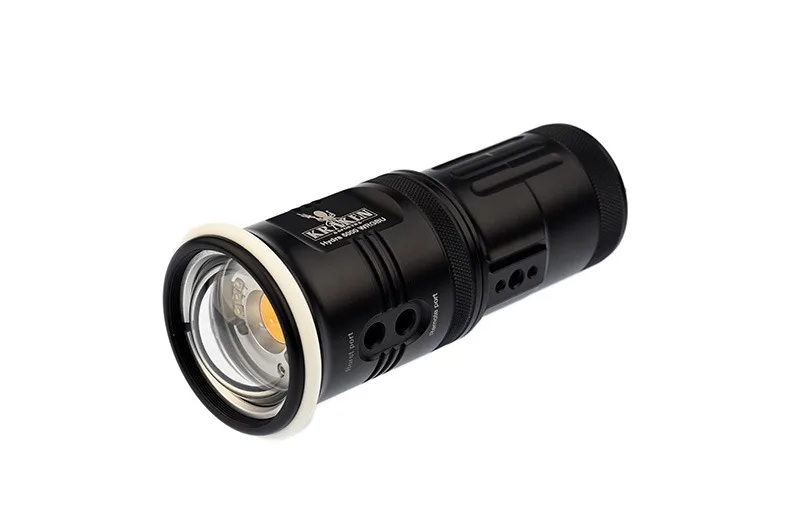

 OrcaTorch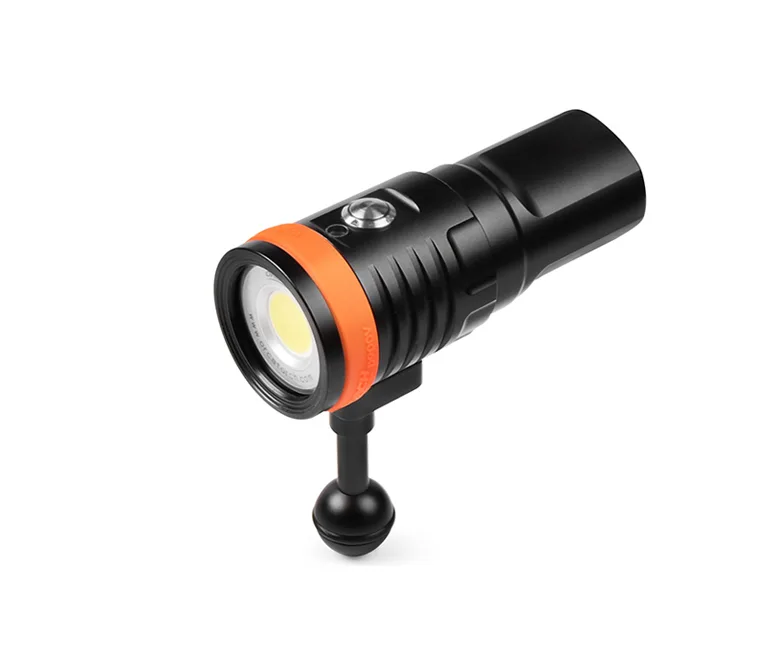
Scores are our editorial opinion of these models, based on features, suitability and ownership trade-offs—not hands-on test results. How we chose →
We’d pick the D910V.
Our pick is OrcaTorch D910V. Our pick for buyers who favour magnetic charging and a 5,000-lumen flood with a stated CRI of 92.
Which one suits you?
Kraken Sports Hydra 5000
We like its dial and eleven adjustment levels for controlling lighting rather than jumping between a few presets. The manufacturer lists conflicting runtime figures; confirm the exact version before relying on either.
Get to know this model →OrcaTorch D910V
Our pick for buyers who favour magnetic charging and a 5,000-lumen flood with a stated CRI of 92. Its stated full-power runtime is 50 minutes, so compare output and endurance together.
Get to know this model →Specifications side by side
The details that matter, side by side. “Check with the brand” means we have not confirmed that detail.
| Detail | Kraken Sports Hydra 5000 | OrcaTorch D910V |
|---|---|---|
| OutputCheck with the brand | 5000 lm constant / 6000 lm burst | Check with the brand |
| Beam | 120° white | 120° |
| CRI / colourCheck with the brand | 90 / 5600K | Check with the brand |
| ControlCheck with the brand | Push-button dial; 11 levels | Check with the brand |
| RuntimeCheck with the brand | 35 min in main table; conflicting 60 min elsewhere | Check with the brand |
| WeightCheck with the brand | 520 g land / 265 g underwater | Check with the brand |
| Depth ratingCheck with the brand | 100 m | Check with the brand |
| Output settingsCheck with the brand | Check with the brand | 5000 / 2000 / 500 lumens |
| ColourCheck with the brand | Check with the brand | 5700 K; CRI 92 (manufacturer) |
| Rated runtimeCheck with the brand | Check with the brand | 50 minutes at full power |
| ChargingCheck with the brand | Check with the brand | Magnetic; 2.5 hours stated |
Showing all 11 specification rows.
What the differences mean when you buy
Continuous output and coverage
Kraken Sports Hydra 5000
- Output
- 5000 lm constant / 6000 lm burst
- Beam
- 120° white
OrcaTorch D910V
- Beam
- 120°
Start with the mode used while recording. Burst and time-limited boost values are not continuous output. Compare coverage on the same underwater or in-air basis and consider the lens you use. More total lumens do not automatically mean better subject illumination or a more even beam across a wide-angle frame.
Colour and control choices
Kraken Sports Hydra 5000
- CRI / colour
- 90 / 5600K
- Control
- Push-button dial; 11 levels
OrcaTorch D910V
- Colour
- 5700 K; CRI 92 (manufacturer)
Colour temperature, colour-rendering claims and red or spot modes serve different purposes. Compare the mode you actually plan to shoot, including how it changes runtime. Where a source has conflicting CRI or output figures, resolve the discrepancy before using it to justify the purchase. Test the camera’s white-balance workflow rather than assuming one setting fixes every scene.
Battery, runtime and rig balance
Kraken Sports Hydra 5000
- Runtime
- 35 min in main table; conflicting 60 min elsewhere
- Weight
- 520 g land / 265 g underwater
OrcaTorch D910V
- Rated runtime
- 50 minutes at full power
- Charging
- Magnetic; 2.5 hours stated
Budget output over an actual shooting session, including repeat dives and access to charging. Compare head-only and complete kits separately, checking trays, grips, adapters and battery contents. Land weight and in-water weight answer different questions; conflicting entries should remain unresolved until the manufacturer clarifies the assembled configuration.
A closer look at both
Hydra 5000
This current Hydra 5000 uses a push-button dial, 5000-lumen white output and red, green, blue and UV channels. Kraken specifies 6000 lumens in burst mode, 120° white coverage and CRI 90 at 5600K. It is not the older two-button Hydra 5000 or 5000+ found in many reviews.
What we like
We like its dial and eleven adjustment levels for controlling lighting rather than jumping between a few presets.
What would make us think twice
The manufacturer lists conflicting runtime figures; confirm the exact version before relying on either.
More about the Hydra 5000 →D910V
The D910V is a camera light with a broad 120° beam, three output settings and a magnetic charger. OrcaTorch lists 5000 lumens, 5700 K colour temperature and CRI 92. The supplied ball joint lets it attach to a camera arm, while the charge indicator helps monitor its integrated battery pack.
What we like
Our pick for buyers who favour magnetic charging and a 5,000-lumen flood with a stated CRI of 92.
What would make us think twice
Its stated full-power runtime is 50 minutes, so compare output and endurance together.
More about the D910V →Four checks before you place an order
- Match the light’s documented continuous beam and output mode to the camera and intended shooting role.
- Confirm the runtime at that exact mode, keeping burst and reduced-power claims separate.
- Build a complete parts list for trays, arms, clamps, adapters, batteries and chargers.
- Check colour settings and controls on the actual camera rig, and resolve any source conflicts before buying.
Ask for a quote for the complete kit, including the accessories you need. That makes the price comparison much more useful.
Price, accessories and owning the equipment
A head-only price cannot be compared fairly with a kit that includes a tray, grip or mounting components. Include the cost and availability of a spare battery and compatible charger, and check the practical charging time between sessions. Existing accessories should be confirmed compatible by part number.
If upgrading, identify whether the limitation is coverage, usable continuous output, colour control or battery logistics. Buying a larger light can change handling and rig balance. Follow the manufacturer sealing, charging and battery-transport guidance; published output does not establish that a light is suitable as your primary dive-safety light.
How we scored these models & further reading
These are our subjective buying scores out of 100. We weigh the usefulness of the features, the intended diving or carrying job, and the compromises involved in owning the gear. They are not laboratory measurements, safety grades or customer averages. The verdict applies to the two named models, not everything either brand makes.
90–100: one of our first choices for the stated job. 80–89: a strong option with trade-offs. 70–79: a more specific fit. A different fit, camera, valve or dive plan can change which one you should buy.
Questions worth settling
Can I compare the number in the model name?
Only after checking what it represents. Some models use a normal continuous output while others advertise a Turbo, burst or short boost value. Compare the documented recording mode, coverage and runtime rather than assuming the name is a standard measurement.
Which is the better buy for this particular comparison?
Its stated full-power runtime is 50 minutes, so compare output and endurance together. We like its dial and eleven adjustment levels for controlling lighting rather than jumping between a few presets.
Our pick is where we would start. Choose the other model if its fit or features better match your setup—especially where a camera, valve, boot or exposure suit needs an exact match.