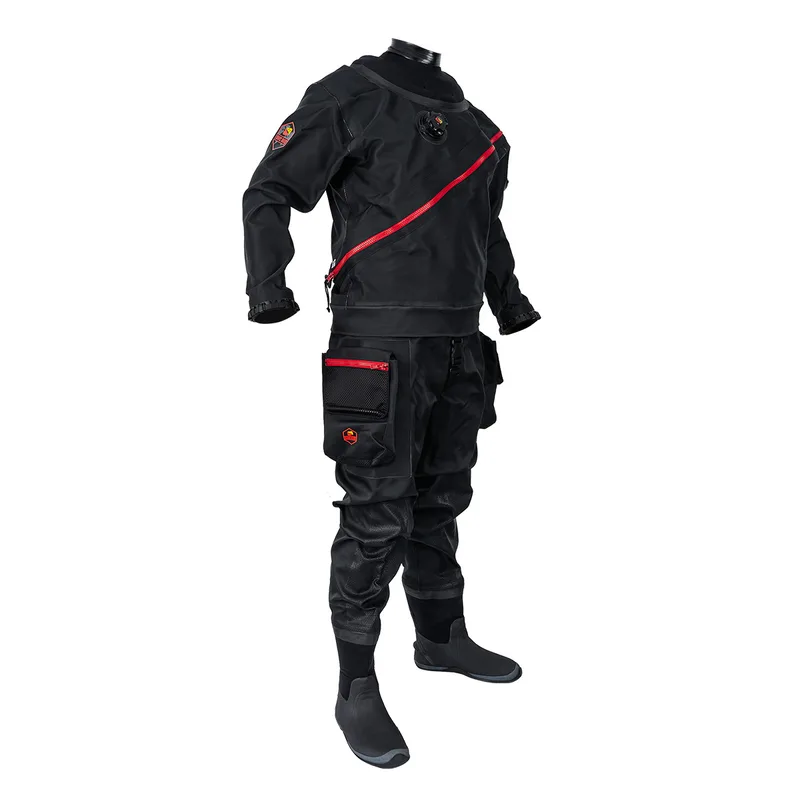
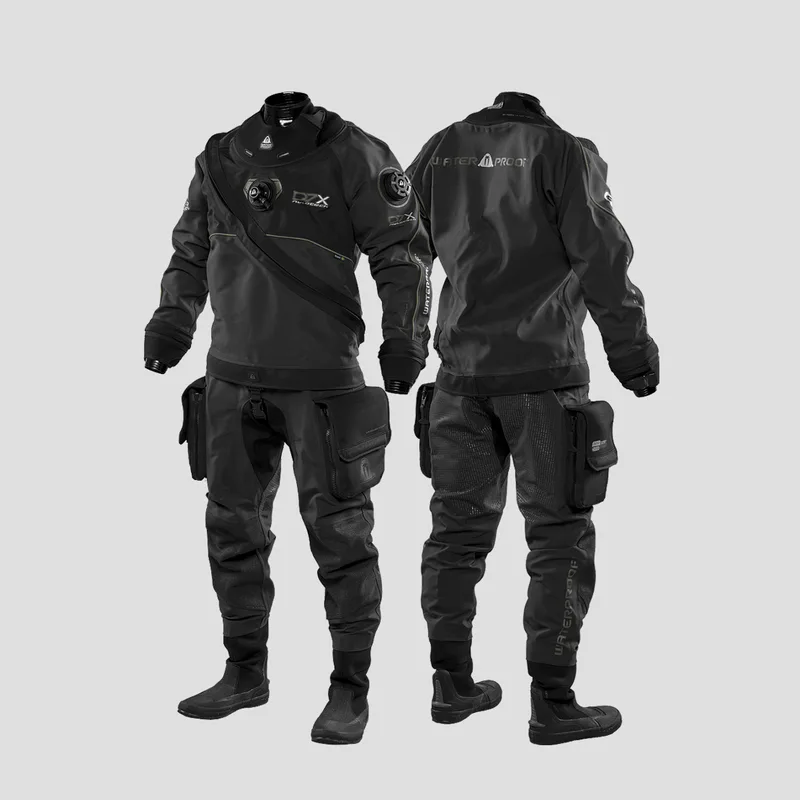
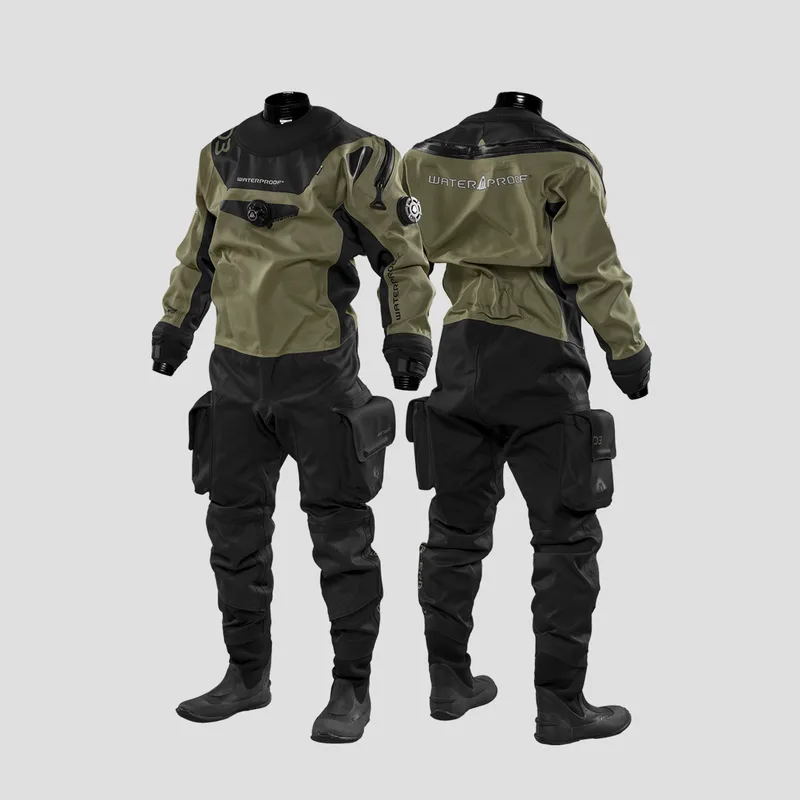
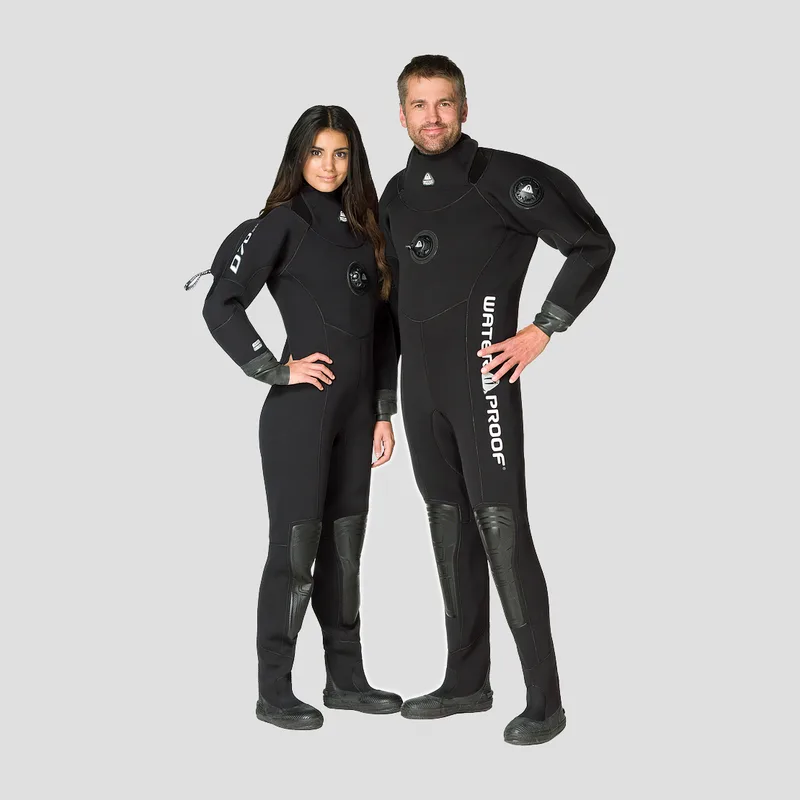
A drysuit is an ordered system of shell, seals, boots, valves and insulation. The same model name can cover several configurations, so a comparison needs to end with an exact quotation. These ten designs show different shell materials and entry arrangements. Training and an appropriate insulation plan remain essential parts of changing to a drysuit.
Updated · Manufacturer specifications and published review evidence
How we chose and ordered these picks
Trilaminate configurations with clear entry and seal details lead, followed by neoprene and integrated-lining options. This is not a warmth or durability test ranking.
List position is an editorial recommendation, not a review score. The selection uses the documented features and limitations below. We have not personally tested this equipment. Verified publisher scores, where available, are shown separately and link to their evidence. Our catalogue is still being researched; inclusion does not mean a product has a completed scored review.
The shortlist at a glance
Choose a model to jump to its details. Compare the exact configuration before ordering.
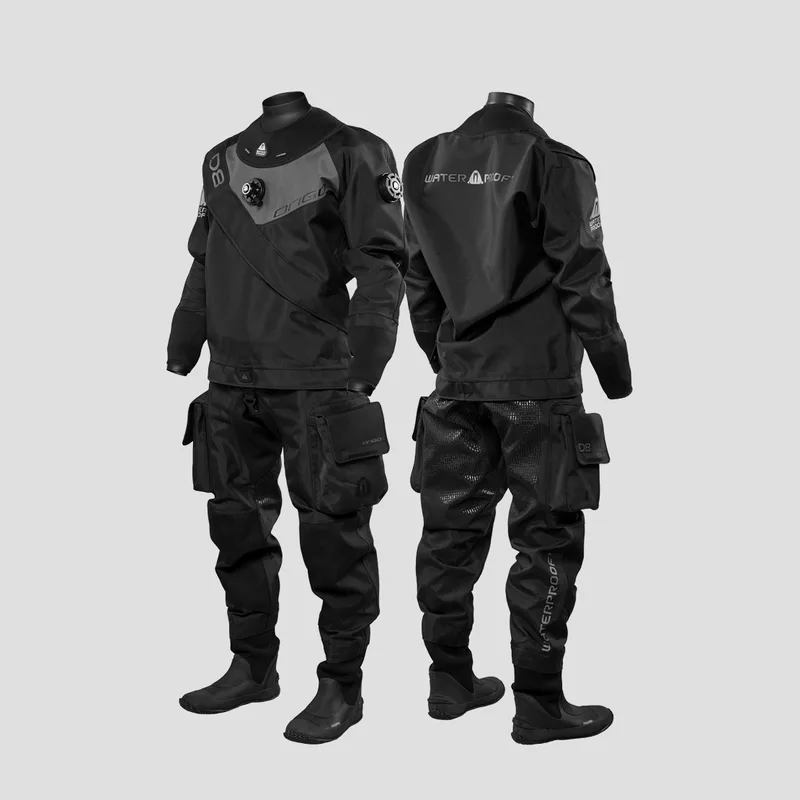
The D8 Origo is a front-entry trilaminate drysuit with a telescopic torso and suspenders. It uses Poly 300D fabric, latex seals and a curved YKK Aquaseal #10 zipper. Cordura knee reinforcement, lightweight pockets and Xlite Flexboots keep the specification focused on the main suit functions rather than the interchangeable silicone systems of some other Waterproof models.
Material
Poly 300D trilaminate
Entry
Curved YKK Aquaseal #10 front zip
Seals
Latex neck and wrist seals
Fit adjustment
Telescopic torso and suspenders
Boots
Xlite Flexboots
What to check
The latex seal arrangement is an important difference from the D7 Evo and D3 Ergo. Ask what a future seal or glove-system change would involve. Check the telescopic adjustment and the boots together: a comfortable torso does not guarantee that the attached footwear works with your feet, socks and fins.
No verified independent overall score yet. Compare the specifications and limitations above.
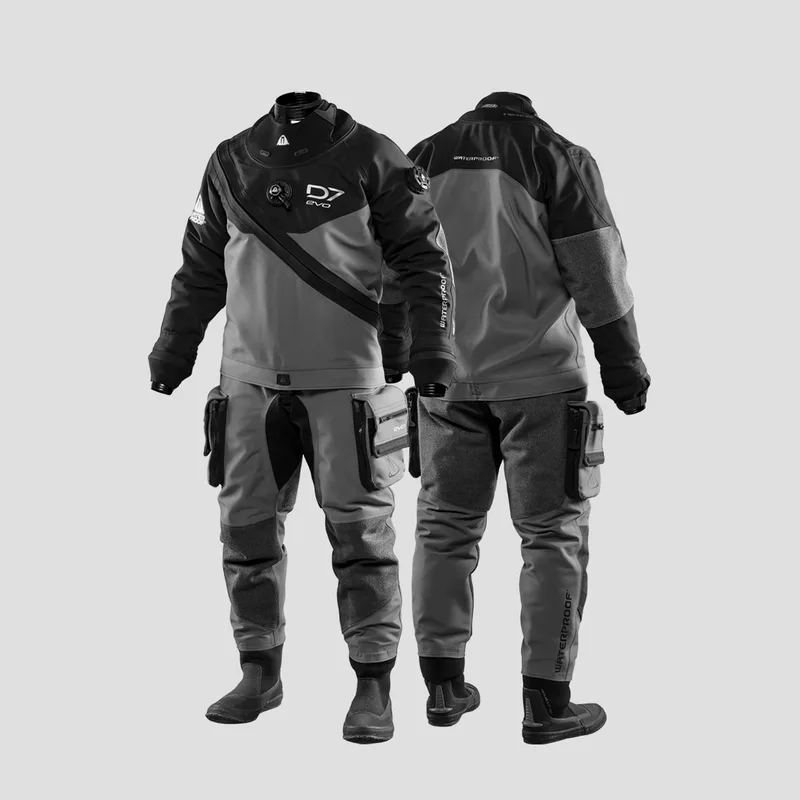
The D7 Evo updates Waterproof’s Nylotech drysuit design with Flexlock wrist rings and a flexible YKK Aquaseal plastic dry zipper. Flexlock has a viewing window to check seal placement. The suit combines this replaceable-seal arrangement with reinforced seat and elbow areas, SI TECH valves and pockets that include a separate compartment in the lid.
Material
Nylotech with reinforced seat and elbows
Zipper
YKK Aquaseal plastic dry zipper
Wrist system
Flexlock replaceable silicone seals
Neck system
SI TECH Quick Neck
Included bag
TPU roll-top dry bag
What to check
The Evo’s wrist system is different from the QCS Oval system listed for the D7X. Confirm the glove interface and spares for the exact suit rather than assuming your older parts transfer. Try the suit with your actual undersuit and cylinder configuration; fabric flexibility alone cannot guarantee that you can reach your valves.
No verified independent overall score yet. Compare the specifications and limitations above.
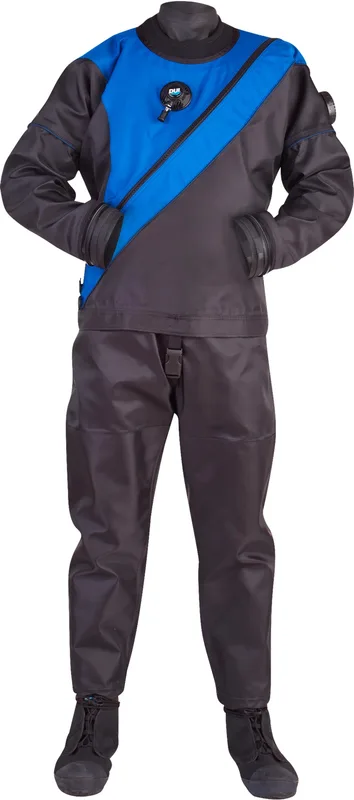
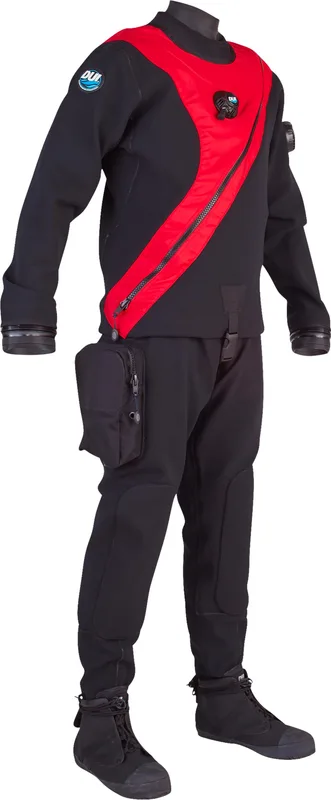
The TLS350 uses nylon/butyl-rubber/nylon trilaminate and is offered with different entry, boot and seal configurations. Its telescopic torso and waist adjustment help tailor the fit around insulation. DUI now lists two leg pockets as included for 2026, a detail worth checking when comparing current orders with older stock or second-hand examples.
Material
Nylon / butyl rubber / nylon trilaminate
Entry
Front diagonal or shoulder-entry options
Torso
Telescopic with internal waist adjustment
Zipper
YKK metal
2026 specification
Two leg pockets included; confirm order configuration
What to check
The model name alone does not define the whole suit. Get the entry style, boots, seals and sizing option written into the quote. ScubaLab’s 2008 Editor’s Pick discussed an earlier TLS350 and should not be read as a test of today’s entire option list. The shell also requires a deliberate choice of undergarments.
No verified independent overall score yet. Compare the specifications and limitations above.
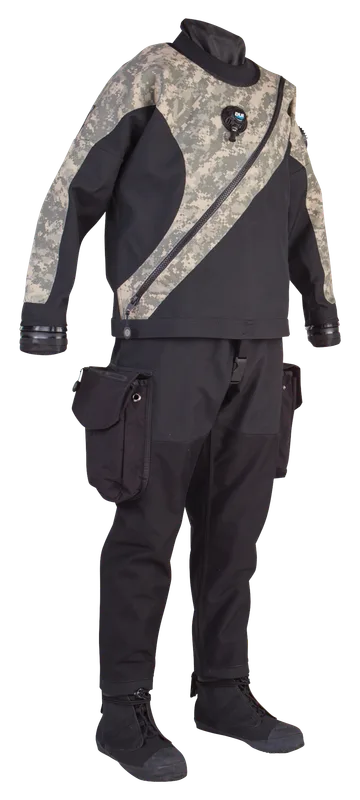
The FLX Extreme is a polyester/butyl-rubber/polyester trilaminate drysuit with a thicker rubber layer than the TLS350 and Cordura overlays on the legs. Its diagonal front zip, telescopic torso and waist adjustment are intended to preserve movement while adding protection. DUI also offers an FLX HD fabric option, which should be specified separately.
Material
Polyester / butyl rubber / polyester trilaminate
Reinforcement
Cordura leg/knee overlays
Entry
Diagonal front zip
Fit
Telescopic torso; internal waist adjustment
Variant caution
FLX HD is a separate fabric option
What to check
The 2019 ScubaLab test concerns the standard FLX Extreme construction, not the later HD option. Testers praised its trim, air control and unobtrusive seal rings, but those findings still depend on fit. Compare the exact zipper, seal, valve and boot package on your quotation with what was tested.
No verified independent overall score yet. Compare the specifications and limitations above.
The 905 Active is a front-entry trilaminate drysuit using Parmasoft Active fabric, HF-welded seams and internal seam tape. It has reinforced wear areas, two self-draining thigh pockets and hybrid rubber/neoprene boots. Buyers can choose latex seals or a SI TECH ring system with silicone seals.
Fabric
370 g/m² Parmasoft Active trilaminate
Seams
HF welded with reinforcing tape
Entry
YKK Aquaseal front zipper; telescopic torso
Seals
Latex or SI TECH rings with silicone
Boots
Hybrid rubber and neoprene
What to check
Try the telescopic torso with your intended insulation and confirm the boot size separately. DYK’s accessible review reports easy movement and useful pocket access, but its test suit had an Ultima Twist system; do not assume that configuration is standard. The article’s conclusion requires a login, and no overall score was visible in the accessible portion.
No verified independent overall score yet. Compare the specifications and limitations above.
The D7X Nylotech is a front-entry trilaminate drysuit with a telescopic torso and a covered metal zipper. Its silicone seals use SI TECH Quick Neck and QCS Oval systems. The Nylotech fabric, expandable pockets and shaped boot arrangement make it a candidate for divers who want a fully equipped shell suit with replaceable seals.
Material
Nylotech trilaminate
Entry
Curved metal front zip with protective cover
Torso
Adjustable telescopic design
Seals
Silicone; Quick Neck and QCS Oval
Storage
Expandable zippered Power pockets
What to check
Do not confuse the D7X with the older D7 Pro or the newer D7 Evo. Search results sometimes mix their photos, owner comments and zipper details. The D7X’s metal zipper and QCS wrist system are meaningful differences from the Evo’s plastic zipper and Flexlock system. Check which version a shop is actually quoting.
No verified independent overall score yet. Compare the specifications and limitations above.
The D3 Ergo is a lightweight trilaminate drysuit with silicone seals, a plastic dry zipper and flexible neoprene boots. Waterproof lists a complete men’s medium at 4.1 kg, including valves, boots, seals and suspenders. The cut is slimmer through the torso and legs, with additional shoulder room, so it deserves attention from divers trying to reduce bulk.
Material
Lightweight trilaminate
Listed weight
4.1 kg, complete men’s medium
Zipper
Plastic dry zipper
Seals
Silicone; Quick Neck and QCS Oval systems
Boots
Flexible neoprene
What to check
The published weight applies to one size, not every configuration. Try the slimmer cut over the insulation you actually intend to wear and check the calves, knees and boot volume. The quick-change neck and QCS Oval wrist systems also need to suit your glove choice. An owner’s unboxing is useful context, but not a long-term durability test.
No verified independent overall score yet. Compare the specifications and limitations above.
The D70 SC is a 3.5 mm neoprene drysuit developed for rental and training use. It has latex neck and wrist seals, a covered metal dry zipper, attached boots and SI TECH valves. Waterproof deliberately keeps the design simpler than its more elaborate drysuits, making it a relevant option for schools and divers considering their first personal drysuit.
Material
3.5 mm neoprene
Seals
Latex neck and wrist seals
Zipper
Metal dry zipper with cover
Valves
SI TECH
Intended use
Training, rental and entry-level personal drysuit use
What to check
Simple equipment still needs a good fit and a workable repair plan. Check the supplied latex seals, boot size and room for insulation rather than assuming the D10’s silicone ring system is included. For a school fleet, ask the supplier about seal and zipper servicing and how sizing works across the students who will use it.
No verified independent overall score yet. Compare the specifications and limitations above.
The CF200X uses DUI’s crushed neoprene: a 3 mm neoprene base reduced to approximately 1 mm, with a heavy-duty nylon exterior. The self-donning configuration has a diagonal front zipper, telescopic torso and suspenders. Boots and seals are configurable, so a complete quotation matters more than a headline starting price.
Material
Crushed neoprene; approximately 1 mm after processing
Entry
CF200X diagonal front-entry configuration
Zipper
YKK metal
Fit
Telescopic torso, crotch strap and suspenders
Options
Several seal and boot configurations; confirm quotation
What to check
Crushed neoprene is not the same construction as an unlined trilaminate shell. Compare the complete suit’s drying, packing and insulation requirements for your trips. ScubaLab’s 2009 assessment concerned a heavily optioned Signature Series setup; its cargo pockets, gloves and boot liners are not evidence that every current CF200X includes those extras.
No verified independent overall score yet. Compare the specifications and limitations above.
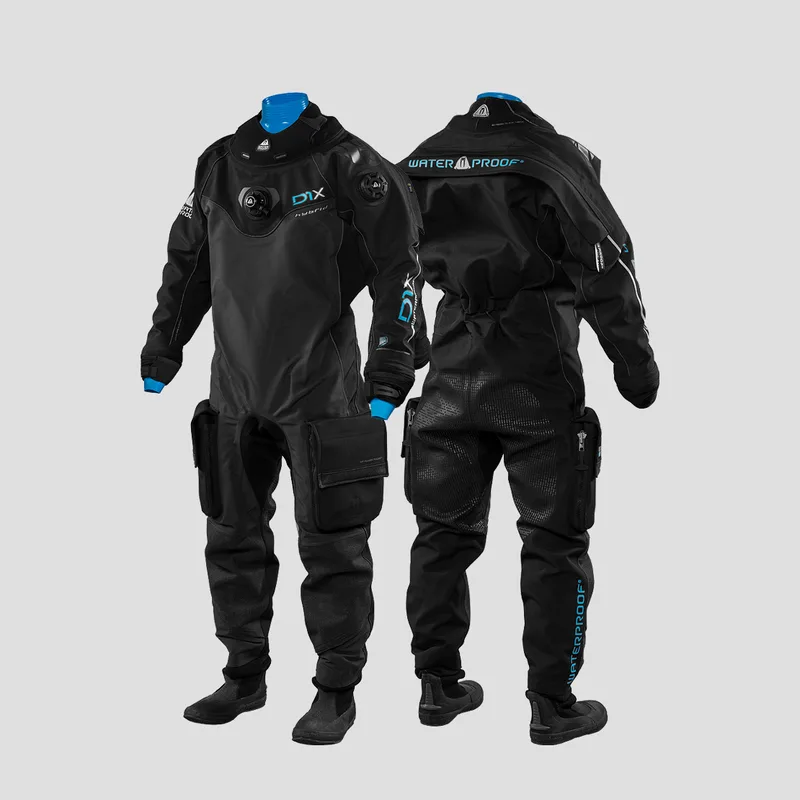
The D1X Hybrid combines a Polytech 500 trilaminate shell with a detachable internal 3D mesh lining. That lining is the defining difference from a conventional unlined shell suit. The D1X also has replaceable silicone seals, a covered metal zipper, expandable pockets and reinforcement at the knees and crotch.
Shell
Polytech 500 trilaminate
Lining
Detachable integrated 3D mesh
Seals
Replaceable silicone neck and wrists
Zipper
Metal dry zipper with cover
Storage
Expandable pockets
What to check
The mesh takes up space inside the suit, so assess layering and mobility as a complete system. A first-dive account on Mind The Box reported comfort but also a substantial weighting change from a wetsuit; that individual result is not a ballast prescription. The older D1 and the D1X must remain separate when judging reviews.
No verified independent overall score yet. Compare the specifications and limitations above.
Product research checked 2026-10-03. Specifications can change; confirm the exact model and package.
Before you buy
Confirm the included seals, boots, pockets and zip material in writing.
Fit the suit over the intended insulation and check reach.
Check local repair support and seal availability before ordering.
Take two or three suitable models from this list into a comparison, then remove any that fail your fit or compatibility checks. A lower position here can still be the better purchase for your setup. Check the product page for source dates and unresolved details before placing an order.
Does a drysuit keep me warm without an undersuit?
A drysuit primarily keeps water out. Insulation depends on the suit construction and the layers worn with it; shell suits particularly need an appropriate thermal plan.