
SCUBAPRO vs Zeagle
GO Travel Fin vs Recon
Which one would we buy?

 Zeagle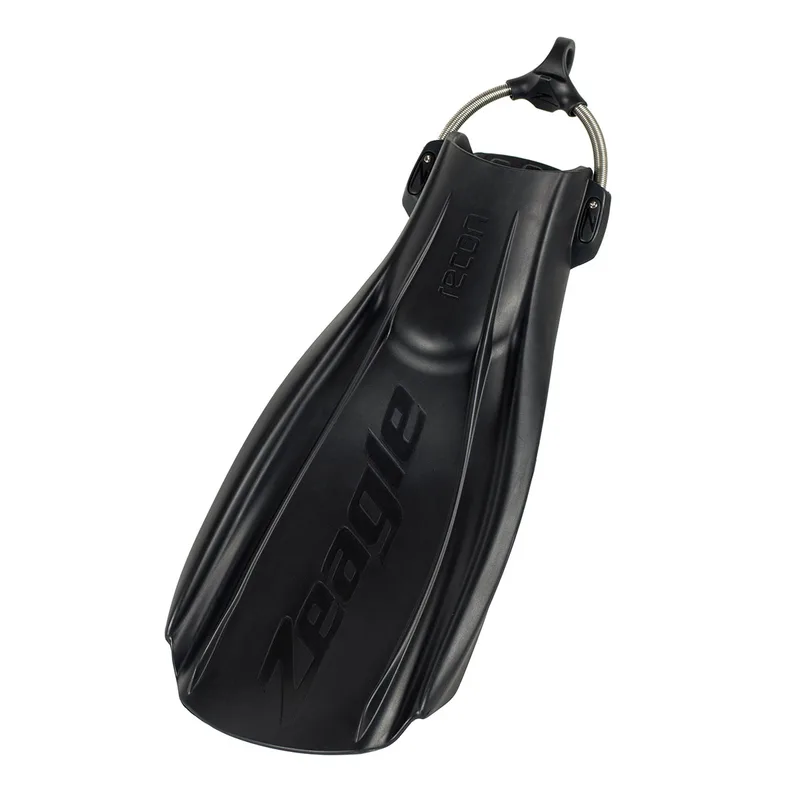
Scores are our editorial opinion of these models, based on features, suitability and ownership trade-offs—not hands-on test results. How we chose →
We’d pick the GO Travel Fin.
Our pick is SCUBAPRO GO Travel Fin. Our travel favourite: the published 1.2 kg M/L pair weight and stacking blades make a persuasive packing case.
Which one suits you?
SCUBAPRO GO Travel Fin
Our travel favourite: the published 1.2 kg M/L pair weight and stacking blades make a persuasive packing case. The pocket is intended for bare feet or neoprene socks, not a thick boot.
Get to know this model →Zeagle Recon
We like Recon as an alternative for divers building a deliberate, boot-based fin setup. Try the size with your actual boots before deciding on the rest of the fin.
Get to know this model →Specifications side by side
The details that matter, side by side. “Check with the brand” means we have not confirmed that detail.
| Detail | SCUBAPRO GO Travel Fin | Zeagle Recon |
|---|---|---|
| Foot pocketCheck with the brand | Barefoot or neoprene socks | Check with the brand |
| Material | Monprene | Compression-moulded natural rubber |
| StrapCheck with the brand | Replaceable self-adjusting bungee | Check with the brand |
| Blade designCheck with the brand | 25° pre-angled; stacking system | Check with the brand |
| WeightCheck with the brand | M/L: 1.2 kg per pair including straps | Check with the brand |
| BuoyancyCheck with the brand | Check with the brand | Negative |
| Blade angleCheck with the brand | Check with the brand | 25 degrees |
| Heel hardwareCheck with the brand | Check with the brand | Adjustable stainless buckle system |
| SizesCheck with the brand | Check with the brand | M, L, XL |
Showing all 9 specification rows.
What the differences mean when you buy
Footwear and retention
SCUBAPRO GO Travel Fin
- Foot pocket
- Barefoot or neoprene socks
Zeagle Recon
- Sizes
- M, L, XL
Compare the fin with the footwear it will actually hold. A barefoot or sock pocket is a different purchase from a pocket selected around a substantial boot. Check heel retention and toe pressure in the exact size. A taller pocket can solve boot clearance but can also feel loose with smaller footwear; the size label alone is insufficient.
Blade and material
SCUBAPRO GO Travel Fin
- Blade design
- 25° pre-angled; stacking system
- Material
- Monprene
Zeagle Recon
- Material
- Compression-moulded natural rubber
- Blade angle
- 25 degrees
- Buoyancy
- Negative
Channels, vents, pivots and rubber compounds describe construction. They do not give a comparable measurement of thrust, effort or fatigue. Where a manufacturer describes buoyancy or stiffness, retain that attribution and confirm the relevant size. If possible, arrange a supervised trial using your normal equipment rather than deciding from a flex demonstration in a shop.
Straps, dimensions and luggage
SCUBAPRO GO Travel Fin
- Heel strap
- Replaceable self-adjusting bungee
- Weight
- M/L: 1.2 kg per pair including straps
Zeagle Recon
- Heel hardware
- Adjustable stainless buckle system
Check whether the listed strap is the one included in the current package and whether replacements are available. Compare pair weight with pair weight in the same size, including straps. A short blade may still have a wide pocket or heavy construction, so measure the actual bag space rather than treating compact-looking fins as automatic travel winners.
A closer look at both
GO Travel Fin
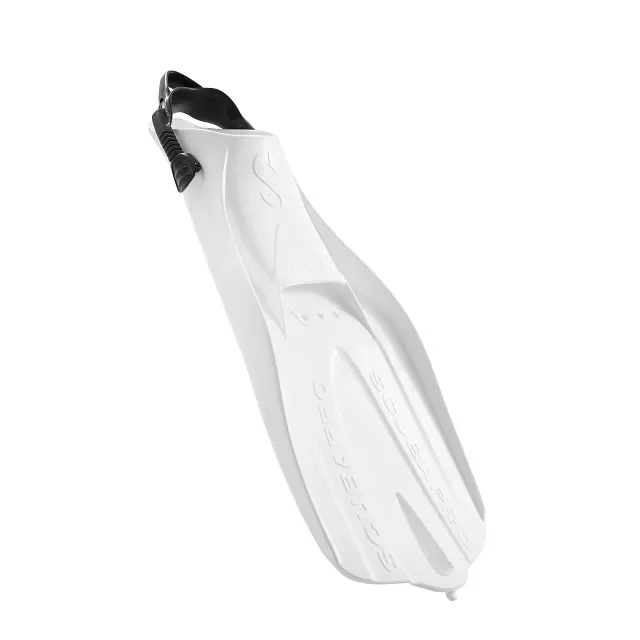
GO Travel is an open-heel fin designed for bare feet or neoprene socks. Its Monprene construction, bungee strap and interlocking blades make it a compact packing option.
What we like
Our travel favourite: the published 1.2 kg M/L pair weight and stacking blades make a persuasive packing case.
What would make us think twice
The pocket is intended for bare feet or neoprene socks, not a thick boot.
More about the GO Travel Fin →Recon
The Recon is a negatively buoyant rubber fin with a 25-degree angle between blade and foot pocket. Zeagle uses compression-moulded natural rubber, reinforced side rails and adjustable stainless heel hardware. Its substantial construction suits buyers comparing traditional technical-style fins rather than the lightest luggage options.
What we like
We like Recon as an alternative for divers building a deliberate, boot-based fin setup.
What would make us think twice
Try the size with your actual boots before deciding on the rest of the fin.
More about the Recon →Four checks before you place an order
- Bring the actual boots or socks to the fitting and confirm that the size selected retains them securely.
- Operate the heel strap and any releases with your usual gloves.
- Measure the complete pair against your bag and obtain a size-specific weight if travel limits matter.
- For a change in stiffness or buoyancy, assess the result through a suitable supervised trial rather than using the fin as an assumed correction for trim.
Ask for a quote for the complete kit, including the accessories you need. That makes the price comparison much more useful.
Price, accessories and owning the equipment
Include compatible boots, replacement straps and any required modular components in the purchase comparison. If one fin relies on a particular blade or pocket system, ask for the replacement part codes and current availability. Modularity is useful only when the components you need can actually be obtained.
An upgrade makes sense when it fixes something you notice: a pinching pocket, awkward strap or bulky travel bag. We would try the fit first and choose the blade style second. Rinse the fins, look after the straps and store them without bending the blades.
How we scored these models & further reading
These are our subjective buying scores out of 100. We weigh the usefulness of the features, the intended diving or carrying job, and the compromises involved in owning the gear. They are not laboratory measurements, safety grades or customer averages. The verdict applies to the two named models, not everything either brand makes.
90–100: one of our first choices for the stated job. 80–89: a strong option with trade-offs. 70–79: a more specific fit. A different fit, camera, valve or dive plan can change which one you should buy.
Questions worth settling
Is the stiffer fin automatically better in current?
No. Stiffness descriptions are not matched propulsion tests, and the result also depends on fit, technique and the diver. This comparison cannot establish that one fin lets you safely undertake a dive with stronger current.
Which is the better buy for this particular comparison?
The pocket is intended for bare feet or neoprene socks, not a thick boot. We like Recon as an alternative for divers building a deliberate, boot-based fin setup.
Our pick is where we would start. Choose the other model if its fit or features better match your setup—especially where a camera, valve, boot or exposure suit needs an exact match.