A drysuit changes the fin-fitting problem. Larger boots need sufficient pocket height and width, and fin buoyancy can affect how the whole setup feels. These six models include a taller-pocket design, spring straps and documented differences in buoyancy. They are candidates for fitting and an appropriate practice session, not a prescription for adding weight to your feet.
Updated · Manufacturer specifications and published review evidence
How we chose and ordered these picks
The explicitly taller pocket leads, followed by secure heel hardware and documented density choices. We do not infer fit from nominal shoe sizes.
List position is an editorial recommendation, not a review score. The selection uses the documented features and limitations below. We have not personally tested this equipment. Verified publisher scores, where available, are shown separately and link to their evidence. Our catalogue is still being researched; inclusion does not mean a product has a completed scored review.
The shortlist at a glance
Choose a model to jump to its details. Compare the exact configuration before ordering.
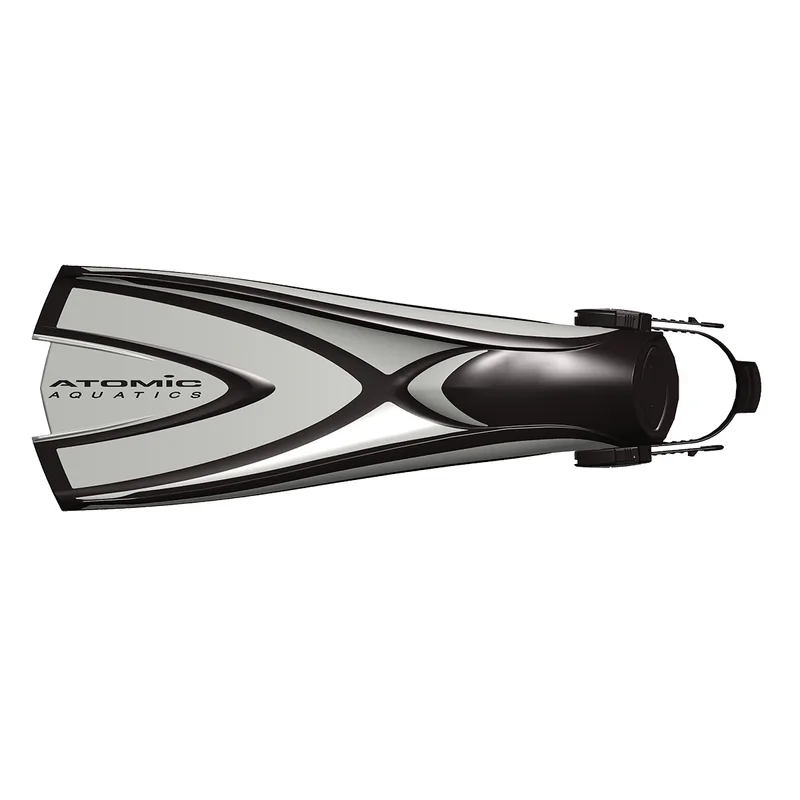
X1 BladeFin has a firmer, shorter blade design with an internal frame and taller foot pockets. Atomic describes the pockets as intended to accommodate larger boots.
Blade description
Firmer and shorter; manufacturer statement
Foot pocket
Taller profile for larger boots
What to check
Try the exact fin-and-boot combination and confirm the size chart. Taller pockets do not guarantee a secure fit with every boot.
No verified independent overall score yet. Compare the specifications and limitations above.
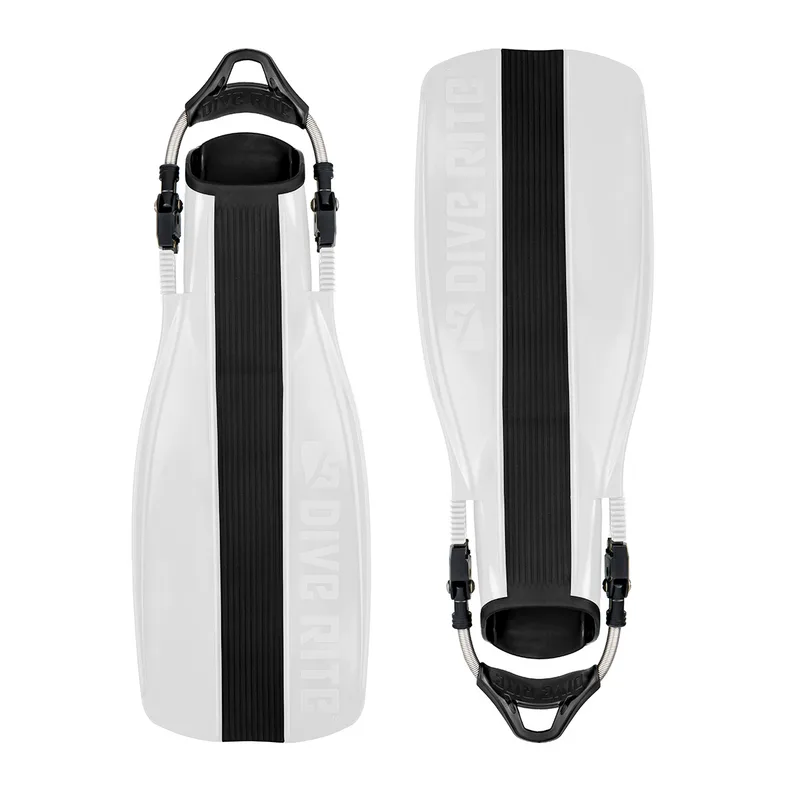
The XT is a paddle-style open-heel fin with stainless spring straps, moulded heel pads and swivel buckles. Dive Rite specifies a thermoplastic-elastomer blade construction. It is a boot-wearing scuba option, so foot-pocket fit should be checked with the boots or drysuit footwear you will actually use.
Foot pocket
Open heel
Blade
Paddle; TPE construction
Heel strap
Marine-grade stainless spring
Buckles
POM swivel
Heel pad
Moulded with finger holds
What to check
DIVEIN’s tester found strong frog-kick propulsion but needed to adapt to the longer blade for back-finning. The review also flags roomy foot pockets. Manufacturer and review material terminology differs, so the current specification here follows Dive Rite rather than assuming every production version is identical.
No verified independent overall score yet. Compare the specifications and limitations above.
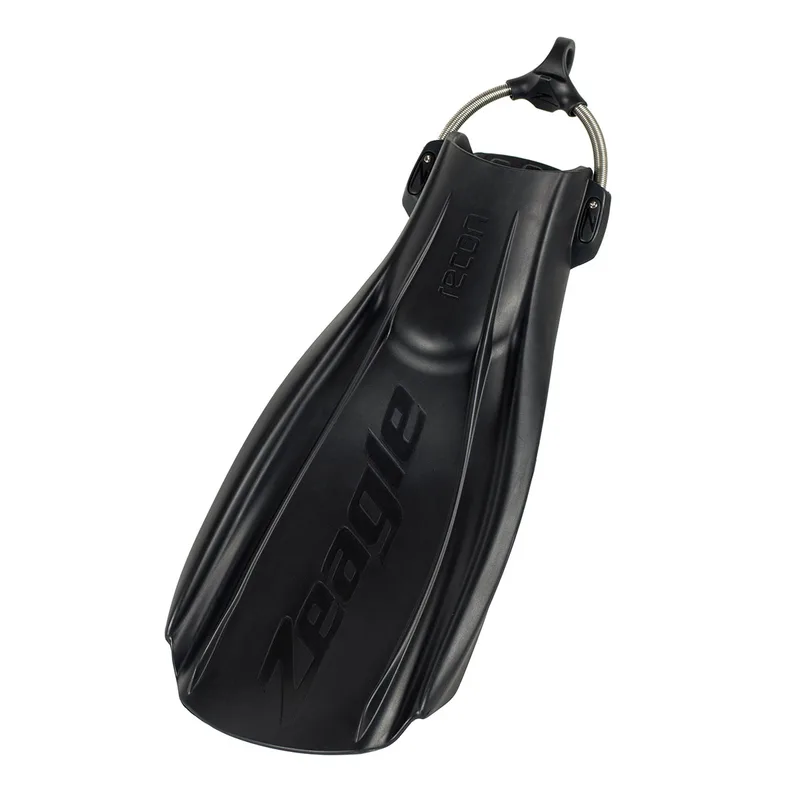
The Recon is a negatively buoyant rubber fin with a 25-degree angle between blade and foot pocket. Zeagle uses compression-moulded natural rubber, reinforced side rails and adjustable stainless heel hardware. Its substantial construction suits buyers comparing traditional technical-style fins rather than the lightest luggage options.
Material
Compression-moulded natural rubber
Buoyancy
Negative
Blade angle
25 degrees
Heel hardware
Adjustable stainless buckle system
Sizes
M, L, XL
What to check
The foot pocket needs to fit your actual wetsuit or drysuit boots. Negative buoyancy changes how the fins feel as part of your whole setup; it is not automatically beneficial. Check spring-strap adjustment and the effort needed to move the blade before committing to a larger, heavier fin.
No verified independent overall score yet. Compare the specifications and limitations above.
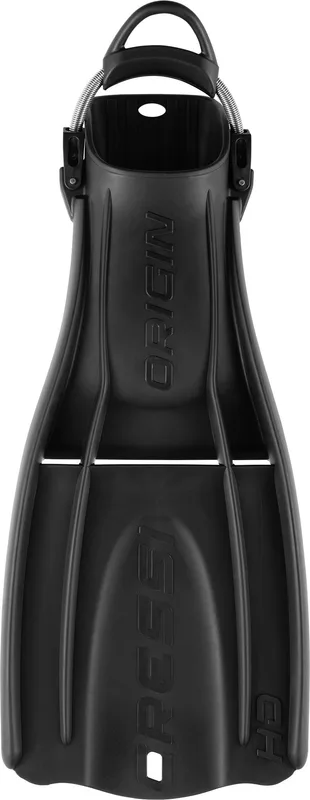
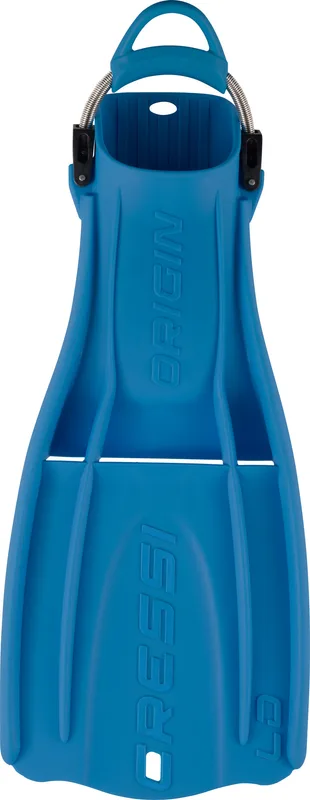
Origin HD uses Cressi’s higher-density material in the vented Origin fin design. The source describes the HD version as slightly negatively buoyant and distinguishes it from the neutral LD version.
Blade
Vented Origin design
Material variant
High density
Buoyancy claim
Slightly negative; manufacturer statement
What to check
Negative buoyancy is not universally desirable. Check the effect of the complete configuration with suitable instruction and confirm sizing with your boots.
No verified independent overall score yet. Compare the specifications and limitations above.
Origin LD is Cressi’s lower-density version of its short, wide, vented Origin fin. The manufacturer describes a single-material construction and neutral buoyancy.
Blade
Short, wide and vented
Construction
Single material
Buoyancy claim
Neutral; manufacturer statement
What to check
The buoyancy description is a manufacturer claim. Assess the complete boot-and-fin fit and your setup with appropriate supervision; do not choose purely from the LD suffix.
No verified independent overall score yet. Compare the specifications and limitations above.
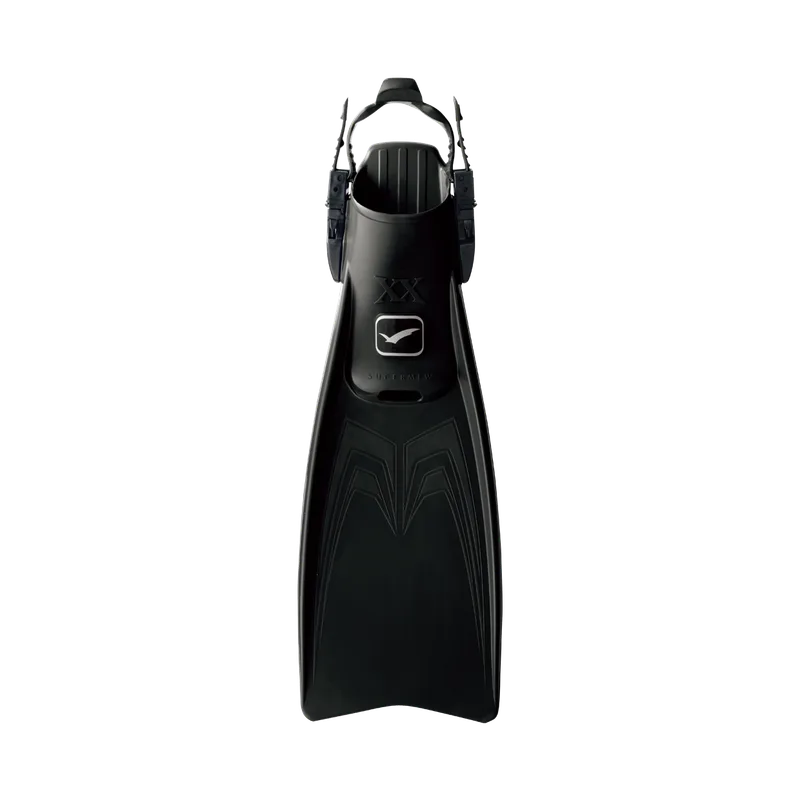
The Super Mew XX is Gull’s strap fin with a long sole and high instep intended to hold a dive boot securely. It combines softer rubber around the foot with stiffer blade and rib compounds. Raised ribs and a V-shaped blade tip are central to its design; it is distinct from both the full-foot Super Mew and Super Mew XX Dry.
Foot pocket
Open heel with strap; boot fitting required
Construction
Hybrid rubber compounds
Sizes
S, M, L, XL
Overall length
540–600 mm, size dependent
Blade details
Raised ribs and V-shaped tip
What to check
Choose the size with your actual boots. Gull’s fit table changes with boot style, and the brand recommends a trial fitting. Overall length ranges from 540 to 600 mm across sizes, so check luggage space. Claims of efficient power transfer are manufacturer claims, not a measured advantage over other fins.
No verified independent overall score yet. Compare the specifications and limitations above.
Product research checked 2026-10-03. Specifications can change; confirm the exact model and package.
Before you buy
Fit the boots with the socks or insulation normally worn inside them.
Check that the heel hardware can be reached without straining.
Assess trim and propulsion with your instructor when changing a drysuit configuration.
Take two or three suitable models from this list into a comparison, then remove any that fail your fit or compatibility checks. A lower position here can still be the better purchase for your setup. Check the product page for source dates and unresolved details before placing an order.
Do drysuit divers always need negative fins?
No. Fin buoyancy is one part of the complete configuration. A negatively buoyant fin can be useful for some divers and counterproductive for others.