A concentrated spot is a different tool from a camera flood. These lights have published narrow-beam specifications in the researched product profiles. Beam-angle measurement methods can differ, so the numbers are not a substitute for seeing a beam in representative water conditions.
Updated · Manufacturer specifications and published review evidence
How we chose and ordered these picks
Compact spot options lead, followed by lower-output and larger-capacity choices. We do not rank intensity by lumens alone or treat manufacturer depth ratings as a dive recommendation.
List position is an editorial recommendation, not a review score. The selection uses the documented features and limitations below. We have not personally tested this equipment. Verified publisher scores, where available, are shown separately and link to their evidence. Our catalogue is still being researched; inclusion does not mean a product has a completed scored review.
The shortlist at a glance
Choose a model to jump to its details. Compare the exact configuration before ordering.
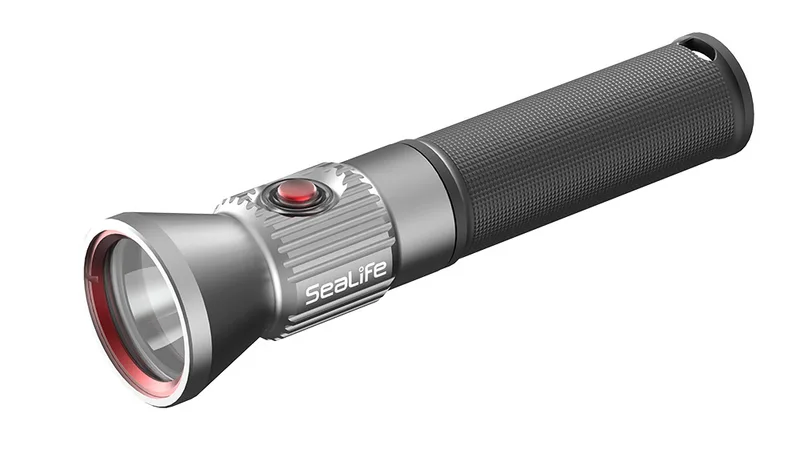
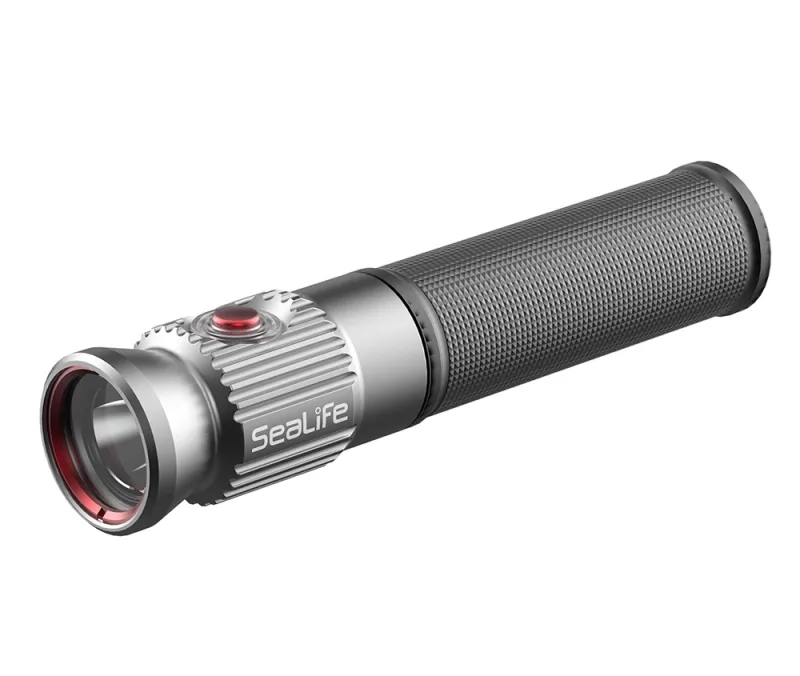
The Mini 1600 increases SeaLife’s compact torch output to 1600 lumens and narrows the underwater beam to 4.5°. It retains three brightness settings, flash and SOS modes, plus an optional instant-on configuration. The concentrated beam favours a small area of interest over broad camera coverage.
Output
1600 lumens
Underwater beam
4.5°
Brightness levels
100%, 50%, 25%
Signalling
Flash and SOS
Camera mounting
Optional YS adapter SL98104
What to check
Confirm whether your chosen package includes the battery and charger. ScubaLab’s first look covers both the 1200 and 1600 and comments favourably on their handling, but supplies no overall numeric grades. Its impressions do not prove that the 1600 is a better fit for every diver.
No verified independent overall score yet. Compare the specifications and limitations above.
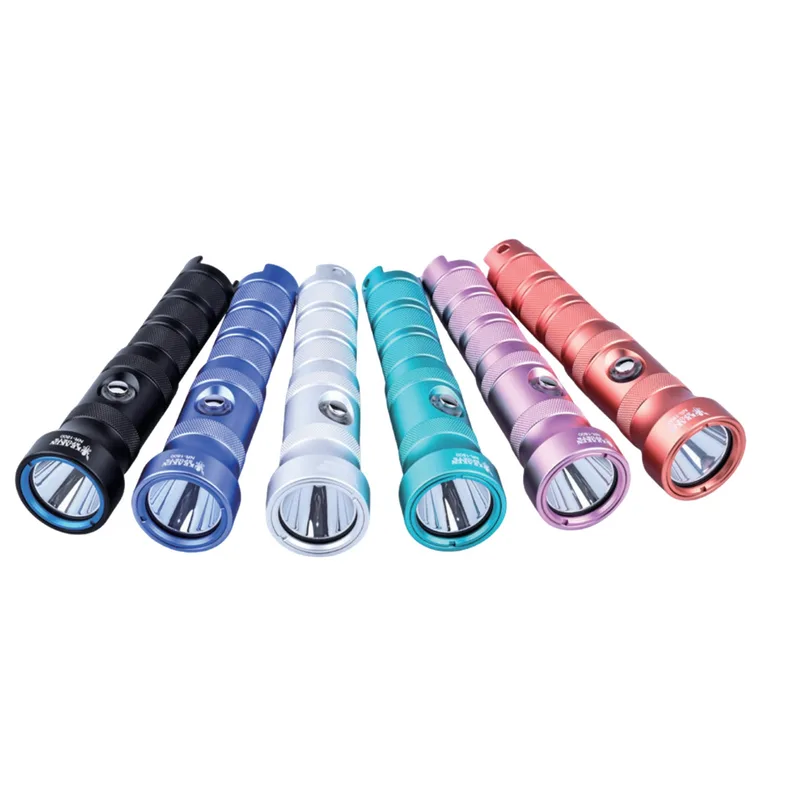
The current NR-2000 is a compact 2000-lumen handheld torch with a 6° spot beam and a button-mounted battery indicator. Kraken lists 70 minutes at full power and a 230 g land weight. Full, half and quarter brightness settings let you reduce the output for nearby subjects.
Output
2000 lumens
Beam
6°
Rated full-power runtime
70 minutes
Dimensions
42 × 153 mm
Weight
230 g land; 65 g underwater
What to check
Kraken has used NR-2000 for two different products. The present 42 × 153 mm light succeeds NR-1800; the larger discontinued NR-2000 preceded NR-2500. DIVEIN’s older review lists different dimensions and weight, so its observations cannot be assumed to describe the current product or its battery compatibility.
No verified independent overall score yet. Compare the specifications and limitations above.
The Mini 1200 is a handheld spot light with 1200 lumens and a 6° underwater beam. Three brightness levels make it easier to reduce output for close work, and separate flash and SOS functions provide signalling options. An optional YS adapter allows mounting beyond the supplied lanyard arrangement.
Output
1200 lumens
Underwater beam
6°
Brightness levels
100%, 50%, 25%
Signalling
Flash and SOS
Camera mounting
Optional YS adapter SL98104
What to check
The 6° figure describes the beam underwater, which matters when comparing it with lights quoted in air. Check whether the listing is the bare light or the battery-and-charger kit. ScubaLab’s first look praises the grip and compact format but is not a long-term test or a scored comparison.
No verified independent overall score yet. Compare the specifications and limitations above.
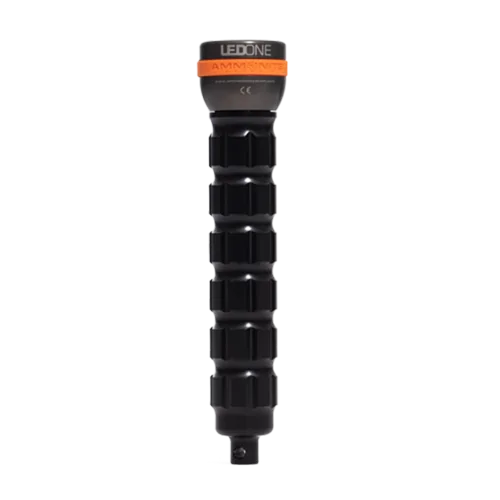
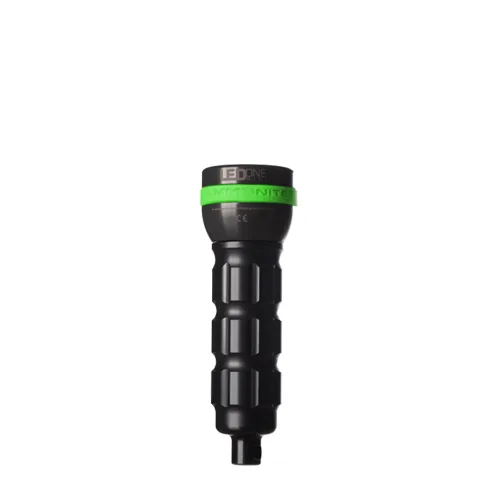
The LED ONE is a 400-lumen backup torch built around three AA cells and a narrow 6° beam. Ammonite lists up to seven hours of constant output. The Delrin body and aluminium head use twist activation, keeping the controls simple and the battery choice familiar.
Output
400 lumens
Beam
6°
Battery
Three AA cells
Rated runtime
Up to seven hours
Depth rating
200 m
What to check
The narrow spot is useful for directed illumination but covers little of a camera’s view. Its output is also modest beside the Stingray MKII. The manufacturer accepts AA batteries or rechargeable cells; check the approved cell specification before buying replacements rather than assuming every AA-shaped lithium cell is suitable.
No verified independent overall score yet. Compare the specifications and limitations above.
The current LED ONE MINI is a 400-lumen backup torch using two CR123A batteries. Its 6° beam concentrates the light into a small area, and the twist-operated aluminium head sits on a Delrin body. Ammonite quotes about 5.5 hours of operation and a 200 m depth rating.
Output
400 lumens, current model
Beam
6°
Battery
Two CR123A cells
Rated runtime
About 5.5 hours
Depth rating
200 m
What to check
CR123A availability deserves attention if you travel away from dive shops. The small body also needs to work with your gloves and chosen attachment method. A widely indexed 2017 first-look article covers a 260-lumen Mini, so its performance observations should not be presented as a test of this updated light.
No verified independent overall score yet. Compare the specifications and limitations above.
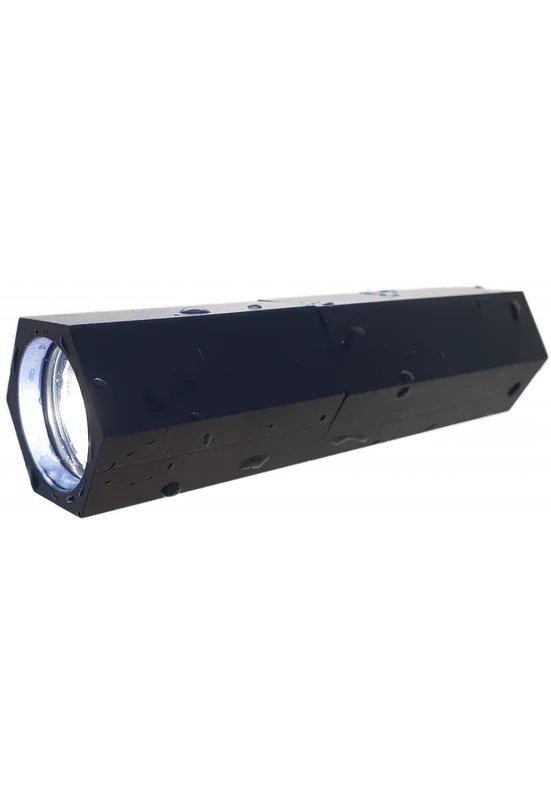
The hw Backup is a small twist-operated torch using one replaceable 18650 cell. Its 8° beam and 4000 K LED favour a focused view over broad scene lighting. The manufacturer lists at least 350 lumens of measured output, separating that figure from the LED’s higher nominal chip output.
Beam
8°
Measured output claim
At least 350 lm
Colour temperature
4000 K
Battery
One 18650; 3500 mAh cell supplied
Dimensions and weight
30 × 130 mm; 200 g
Stated runtime
2 h constant, then 6 h reduced
Manufacturer depth rating
300 m
What to check
The supplied 3500 mAh cell is listed separately from the optional charger. Stated runtime is two hours at constant brightness followed by six hours at reduced output; that tail is not six more hours at full power. Unterwasserwelt’s reviewer liked handling and communication in poor visibility but found cosmetic wear appeared quickly. Its text gives conflicting weights, so the current manufacturer’s 200 g figure is used.
No verified independent overall score yet. Compare the specifications and limitations above.
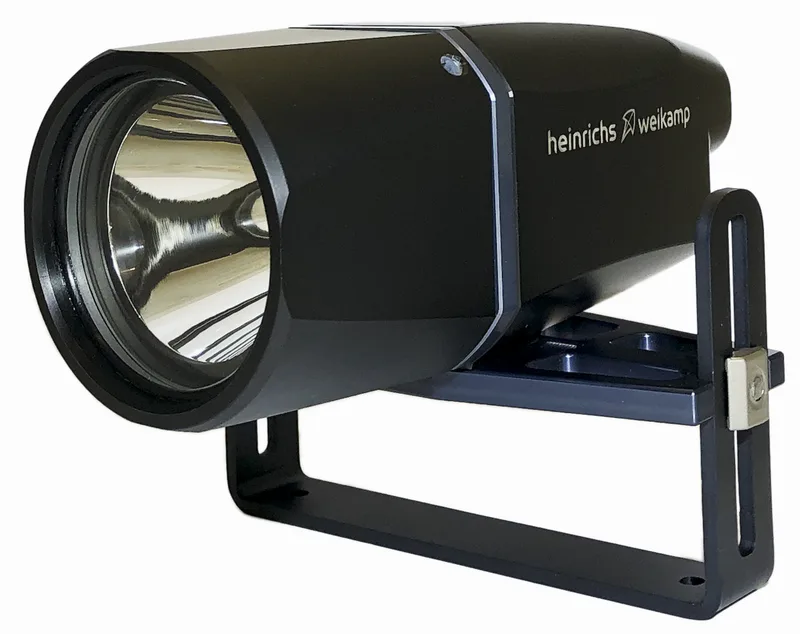
The hw40 is a self-contained primary torch with a narrow 5° beam, four power settings and an adjustable Goodman handle. Its 50.3 Wh battery charges through USB-C Power Delivery after opening the housing. The manufacturer lists 75,000 lux at one metre in air; this is beam intensity, not 75,000 lumens of total output.
Beam
5°
Power settings
5 / 10 / 20 / 40 W
Battery
50.3 Wh, four 18650 cells
Stated runtime
70 min at 40 W; 150 min at 20 W
Charging
USB-C PD input; up to 45 W
Ready-to-use weight
666 g including Goodman handle
Manufacturer depth rating
300 m
What to check
At the highest 40 W setting, the stated runtime is about 70 minutes, compared with 150 minutes at 20 W. Plan around the selected setting and reserve, not the longest low-power figure. Charging requires clean, dry handling of the opened light, and the USB-C port accepts power but cannot charge other devices. Forum discussion raises handling questions without establishing failure rates.
No verified independent overall score yet. Compare the specifications and limitations above.
Product research checked 2026-10-03. Specifications can change; confirm the exact model and package.
Before you buy
Check whether the quoted angle is measured underwater or in air.
Compare continuous runtime with the planned use and required reserves.
Try the switch and attachment with gloves before buying.
Take two or three suitable models from this list into a comparison, then remove any that fail your fit or compatibility checks. A lower position here can still be the better purchase for your setup. Check the product page for source dates and unresolved details before placing an order.
Is a narrow spot a good video light?
Usually a camera needs a more even flood for broad scenes. A spot may serve a specific subject or task, but it is not interchangeable with a wide video beam.