Our category crown goes to our favourite from the models we’ve compared. It reflects our editorial preference; your fit, setup and budget still come first.
Buying rankings: choose by what you need
Three focused lists with real product photos, specifications and buying checks. List positions are editorial choices, separate from the verified scores below.
A new dive computer should solve a specific problem: easier reading, tank-pressure display, a different battery arrangement or functions that match your training.
6 scored products in our current coverage. Ties share a rank. This is a ranking of published ratings, not a hands-on group test or a complete market comparison.
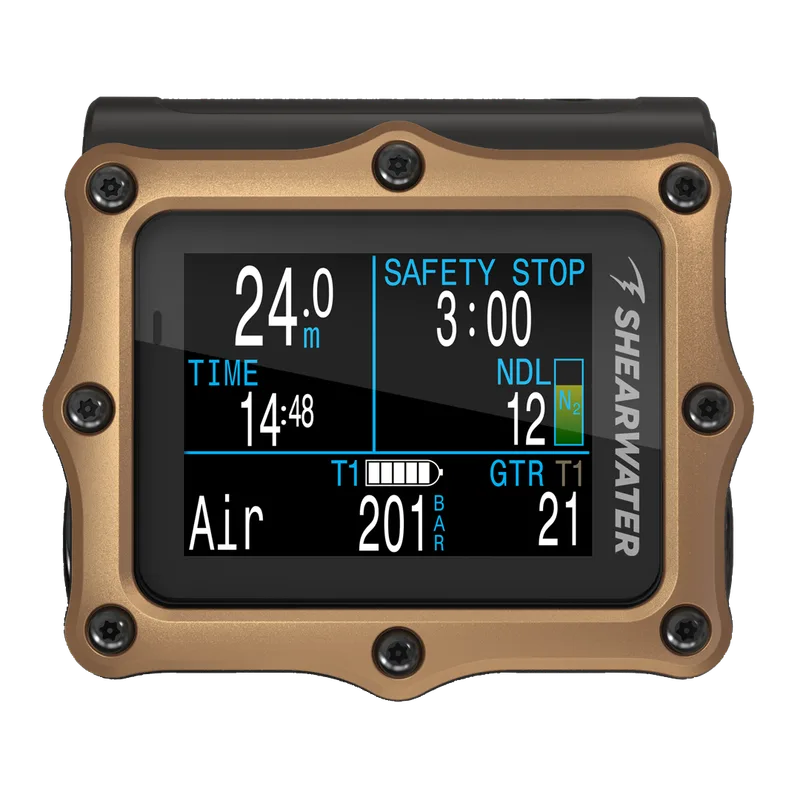
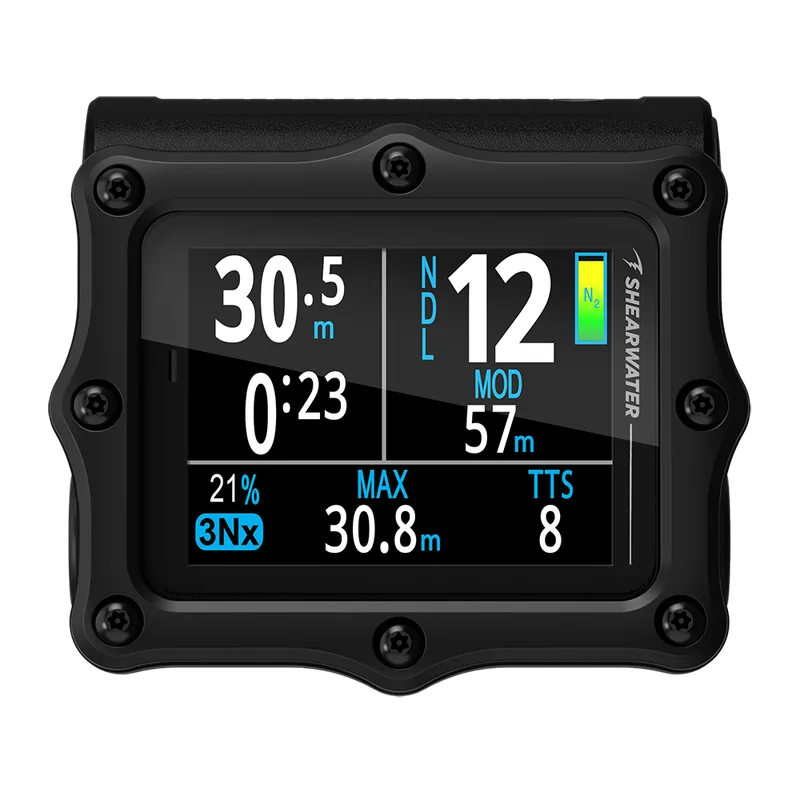
The Perdix 2 is a rectangular dive computer with a 2.2-inch colour display, titanium bezel and piezoelectric buttons. A user-replaceable AA battery, vibration alerts and support for four wireless pressure transmitters are its practical distinguishing features. This is the Perdix 2, not the original Perdix or the newer AMOLED Perdix 3.
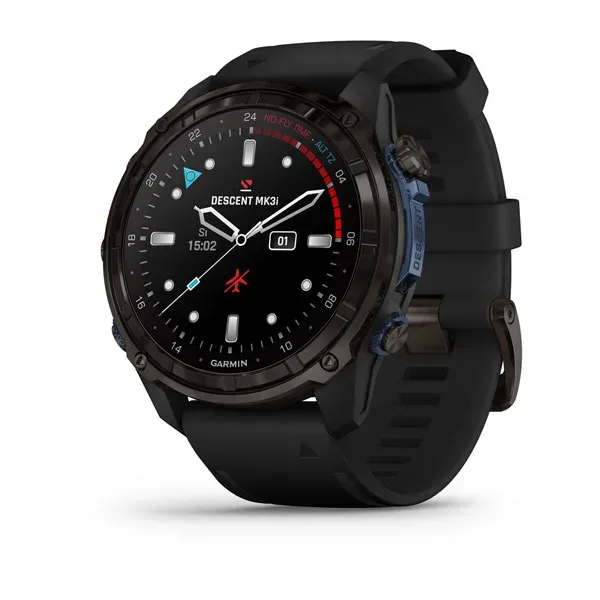
A watch-style dive computer with a sapphire window over its 1.39-inch AMOLED display. It combines wireless tank-pressure monitoring, a digital compass and audible or vibration alerts with recreational, trimix, closed-circuit bailout, gauge and freediving capabilities.
The reviewer highlights battery endurance and the broad dive and activity features, while noting the high price and a steeper interface learning curve.
A compact AMOLED dive computer that adds wireless tank-pressure monitoring and a tilt-compensated compass to the Tern format. It accepts up to four transmitters and supports air, nitrox, three-gas nitrox, gauge and freediving modes.
A rectangular dive computer built around a 2.2-inch colour LCD and two-button controls. Air, nitrox, three-gas nitrox and gauge modes cover its core functions; vibration alerts and wireless charging keep the interface straightforward.
A dive computer and sports watch with a sapphire-covered AMOLED display, rechargeable battery and digital compass. It supports air and nitrox diving, freediving and wireless tank pressure through a compatible Suunto Tank POD.
A narrower list requiring at least two rated publisher groups. Positions are recalculated within this list; more sources do not guarantee that reviewers agree.
The reviewer highlights battery endurance and the broad dive and activity features, while noting the high price and a steeper interface learning curve.
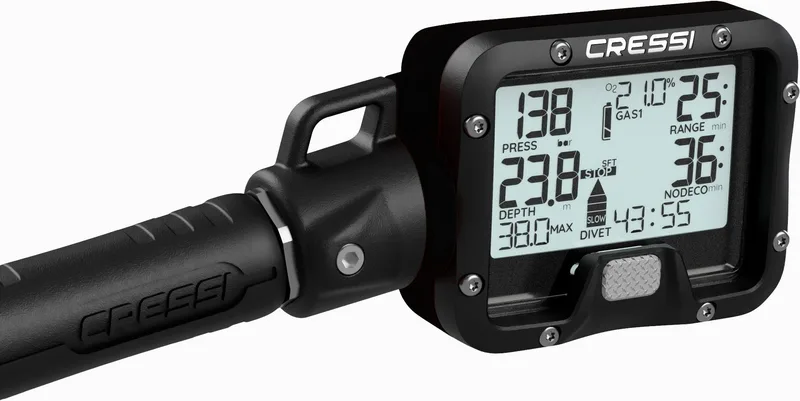
DIGI 3 is a hose-connected dive computer that mounts to a regulator first stage through a high-pressure hose and displays tank pressure. Cressi identifies the Bühlmann ZHL-16C algorithm and user-configurable gradient factors.
Check before buying: Confirm the supplied hose, connection, operating modes and complete manual. Configurable settings require understanding; they are not a shortcut to a suitable dive plan.
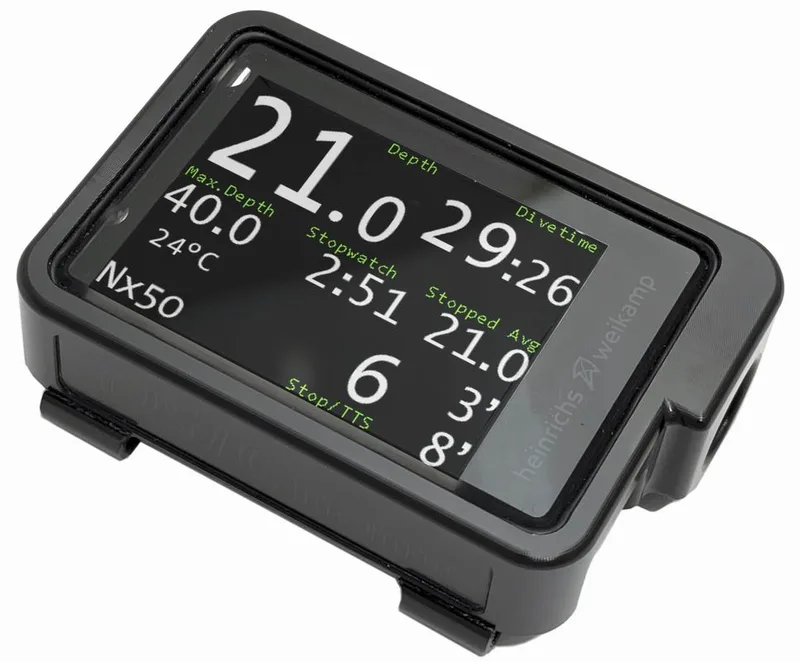
The current OSTC 2 page describes Generation 6, with a 2.8-inch display, a Delrin POM-C housing and bungee mounting. It offers sport or TECH firmware, two recessed sensor buttons and Qi charging. The manufacturer claims up to 100 hours of dive time, which is a stated maximum rather than a result from our testing.
Check before buying: Generation matters: reviews of older OSTC 2 units cannot establish Generation 6 display, battery or button performance. Check the firmware included in the price and the cost of a later TECH upgrade. Compare how the bungee mounting sits over your own exposure suit.
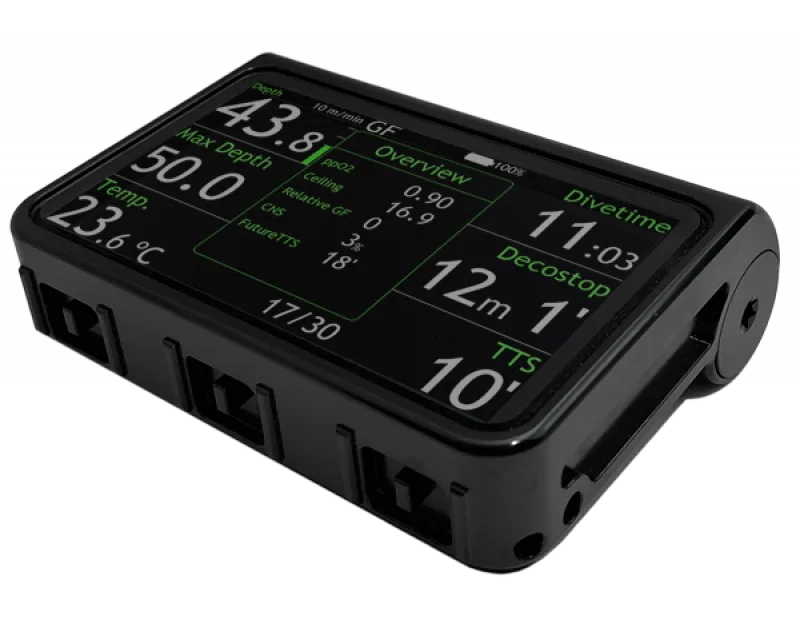
The OSTC 5 is the large-screen model in this comparison, built around a 3.7-inch AMOLED display. Heinrichs Weikamp lists Bühlmann gradient-factor and VPM-B options, full-trimix capability, a digital compass, Bluetooth and wireless charging. An optional S8 connection supports specified external sensor applications.
Check before buying: The display is a reason to inspect the unit, but it also makes wrist fit and mounting important. Confirm installed firmware, selected algorithms and optional interfaces rather than assuming every pictured connection is supplied. Sensor compatibility needs confirmation for the actual application.
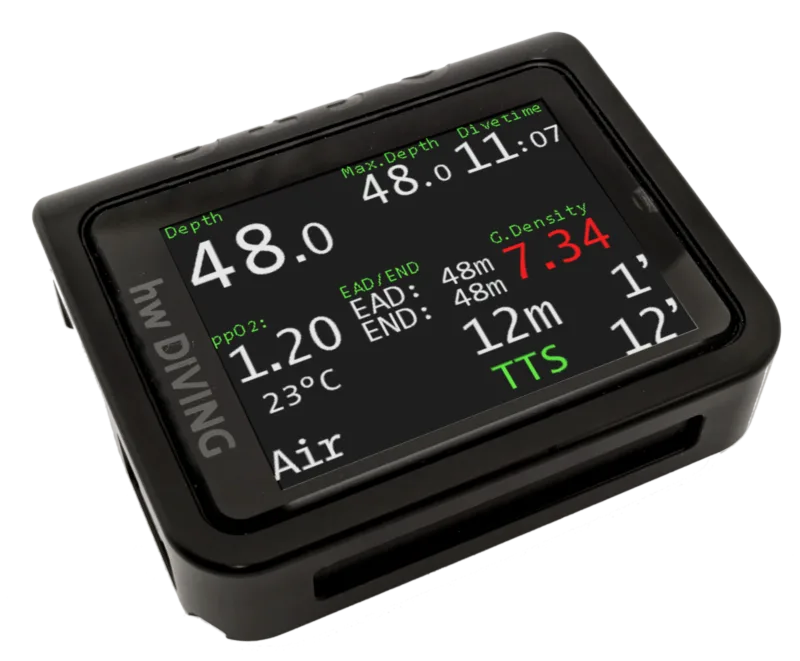
The OSTC nano is the compact option, with a 2-inch 320 × 240 TFT display and USB-C charging. Two recessed sensor buttons operate hwOS sport or TECH firmware. Heinrichs Weikamp states that the computer can be used without an account, cloud service or app, which is useful for buyers who want fewer setup dependencies.
Check before buying: The smaller display should be tried at normal reading distance with your mask on. Confirm which firmware version is supplied and whether a TECH upgrade costs extra. USB-C avoids a dedicated charging pad, but charging and connector care still need to follow the exact manual.
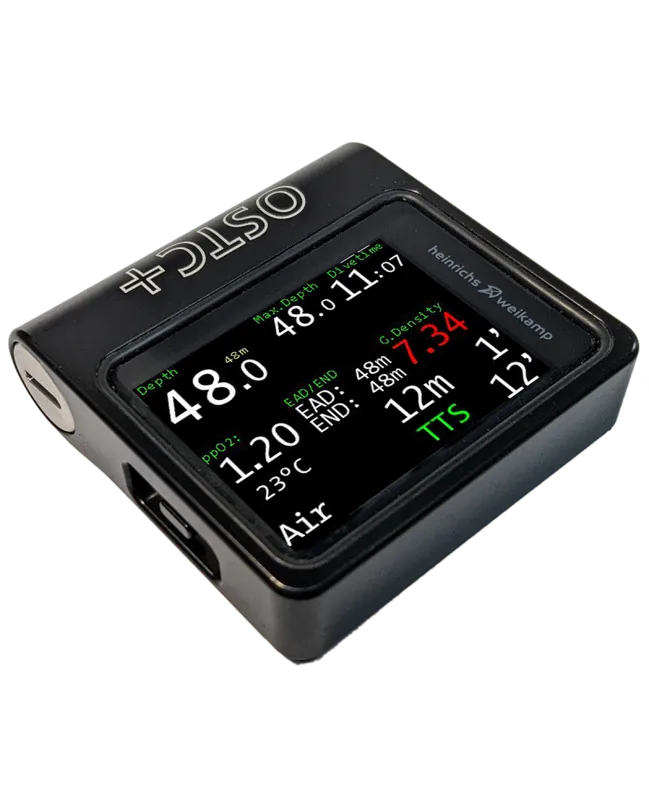
The current OSTC+ pairs a 2.4-inch LCD-TFT display with two recessed sensor buttons. Heinrichs Weikamp offers hwOS sport and TECH firmware, wireless charging and Bluetooth connectivity. An optional Fischer or S8 socket is a separate configuration for compatible oxygen-monitoring applications.
Check before buying: Confirm whether the quoted unit includes sport or TECH firmware: the manufacturer describes the technical upgrade as paid. An optional sensor socket is not included by default. Do not equate the current OSTC+ hardware with every older product called OSTC plus in used listings or reviews.
The Perdix 2 is a rectangular dive computer with a 2.2-inch colour display, titanium bezel and piezoelectric buttons. A user-replaceable AA battery, vibration alerts and support for four wireless pressure transmitters are its practical distinguishing features. This is the Perdix 2, not the original Perdix or the newer AMOLED Perdix 3.
Check before buying: Check the supplied battery type, compatible transmitters and package contents before comparing prices. DiveOtter’s review describes the screen material differently from Shearwater; the specification here follows the manufacturer’s aluminosilicate-glass description. Do not choose advanced diving modes solely because a computer provides them.
The Perdix 3 updates Shearwater’s rectangular computer with a 2.4-inch AMOLED display, titanium bezel and piezoelectric buttons. It supports up to four wireless pressure transmitters and vibration alerts. The larger screen is the most obvious reason to compare it directly with the Perdix 2 rather than treating both generations as the same product.
Check before buying: Tank-pressure monitoring requires compatible transmitters; verify what the package includes. Compare actual screen layouts on your wrist before paying for the newer display. The Perdix 2’s independently published score cannot be transferred to this model, and more displayed data is not automatically easier to read.
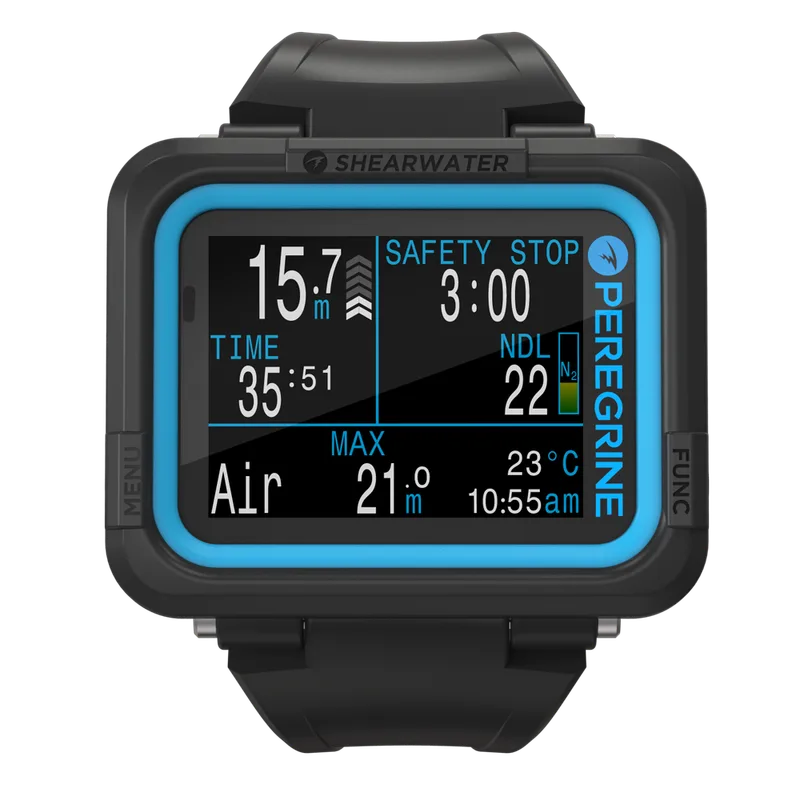
A rectangular dive computer built around a 2.2-inch colour LCD and two-button controls. Air, nitrox, three-gas nitrox and gauge modes cover its core functions; vibration alerts and wireless charging keep the interface straightforward.
Check before buying: Compare with the Peregrine TX if wireless tank pressure or an integrated compass matters. The standard Peregrine does not offer those features. Check screen readability on your wrist before choosing a smaller watch format.
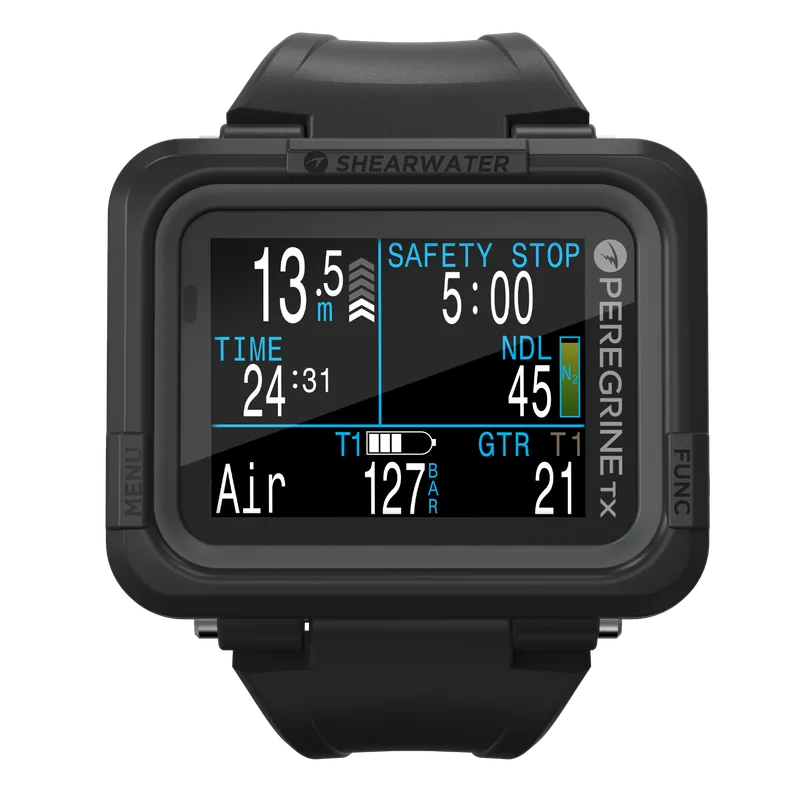
The Peregrine TX combines a large rectangular colour display with wireless tank-pressure support and a tilt-compensated compass. It supports up to four optional transmitters and retains two-button operation, vibration alerts and wireless charging.
Check before buying: A transmitter is optional equipment: check the bundle before budgeting. Compare the larger display against the smaller Tern TX; both offer tank-pressure integration, but their shape and screen technology differ.
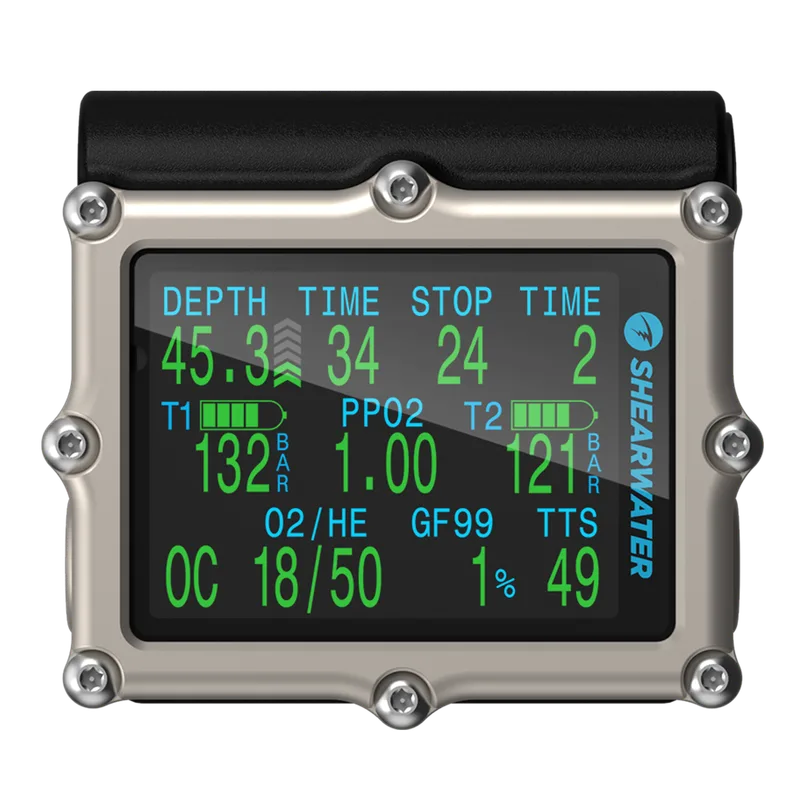
The Petrel 3 is a large rectangular computer with a 2.6-inch AMOLED screen, titanium bezel and replaceable AA battery. It supports vibration alerts and up to four wireless pressure transmitters. Its screen size makes it worth comparing with the smaller-display Perdix models when wrist readability is the main buying priority.
Check before buying: Petrel 3 is a family with standalone and rebreather-connected versions. Confirm the exact variant; a standalone purchase does not include a rebreather interface. A review of a wired CCR handset cannot establish the performance or compatibility of every Petrel 3 configuration.
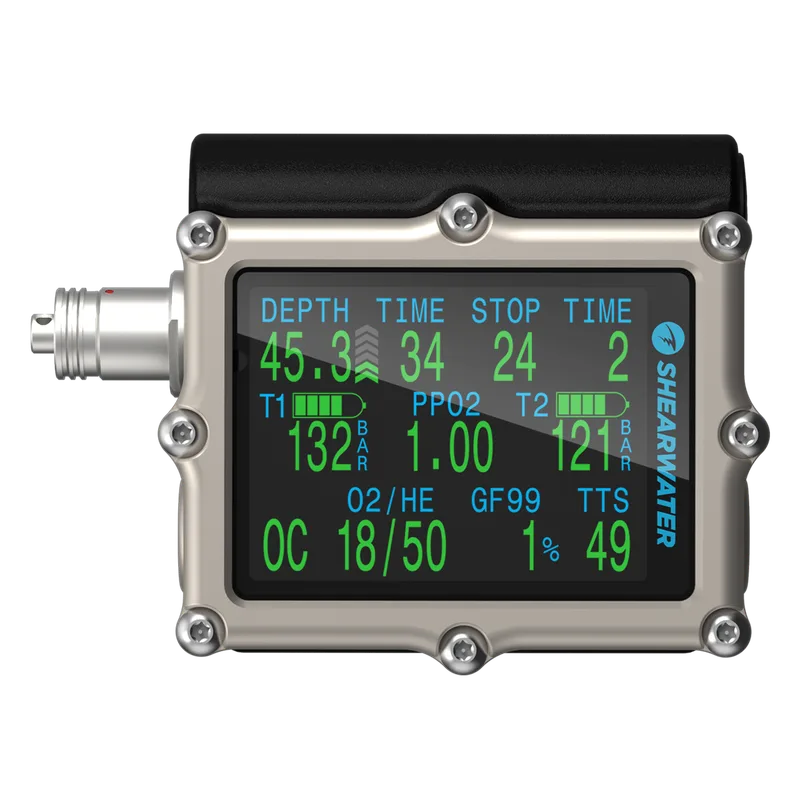
Petrel 3 Fischer combines a 2.6-inch AMOLED screen with a Fischer port for external oxygen-sensor monitoring. Shearwater lists monitoring of one to three cells, open-circuit and rebreather modes, vibration alerts and support for four optional wireless pressure transmitters. A replaceable AA battery supports field servicing.
Check before buying: A Fischer connector is a compatibility requirement, not a guarantee that this computer suits any rebreather. Confirm the approved connection and configuration with the rebreather manufacturer. The 285 g external-monitoring version is bulkier than a watch-format computer; transmitters are optional.
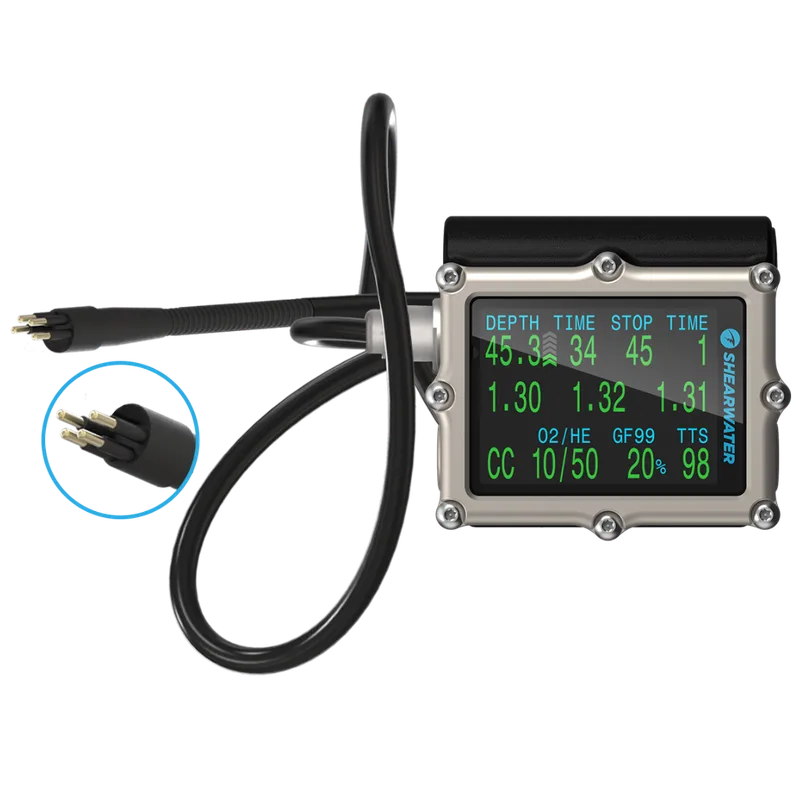
Petrel 3 Monitor (4-Pin) is the analogue four-pin external-monitoring version of Shearwater’s large-screen computer. It reads oxygen sensors and offers a 2.6-inch AMOLED display, vibration alerts, a replaceable AA battery and four-transmitter pressure-monitoring capability. The manufacturer offers 18-inch and 30-inch cable configurations.
Check before buying: Choose the cable and connector for an explicitly compatible rebreather. A four-pin connector is not interchangeable with Fischer or DiveCAN merely because the computers look similar. Confirm whether the longer cable improves routing or simply adds excess length to your particular rig.
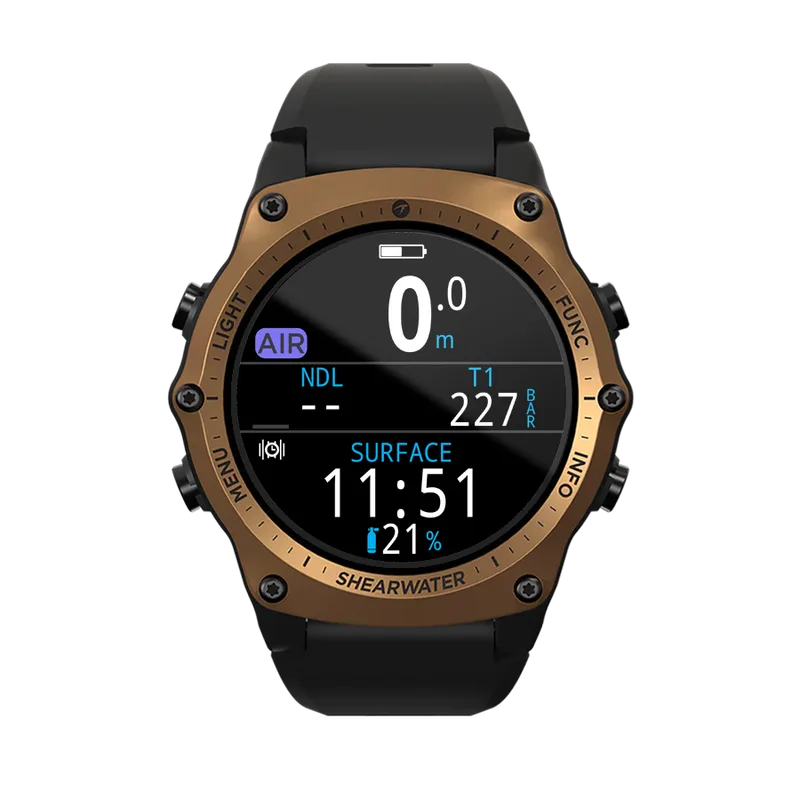
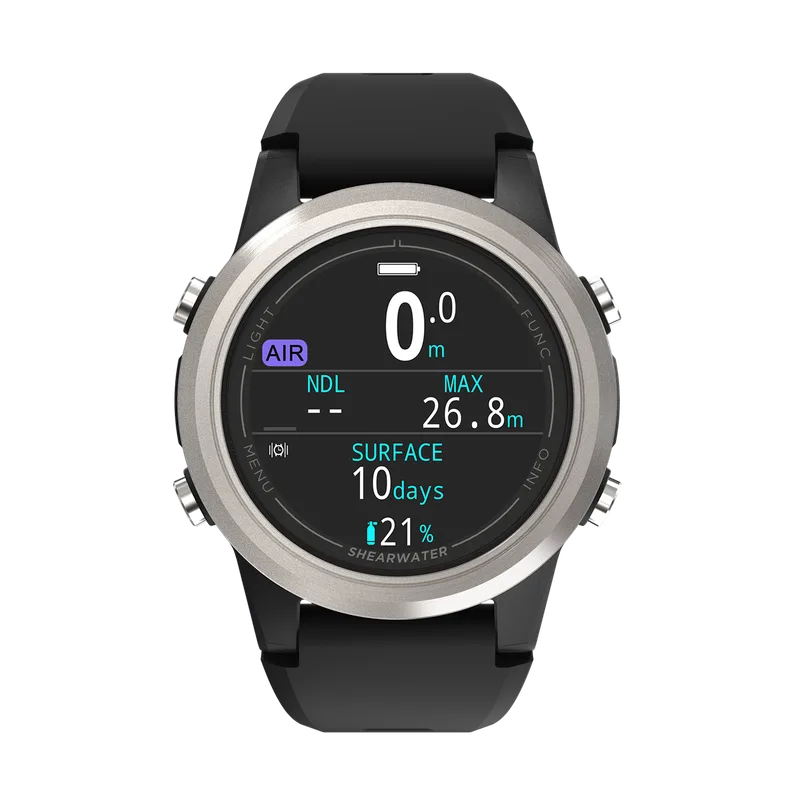
A watch-style dive computer with a sapphire window over its 1.39-inch AMOLED display. It combines wireless tank-pressure monitoring, a digital compass and audible or vibration alerts with recreational, trimix, closed-circuit bailout, gauge and freediving capabilities.
Check before buying: Its technical modes add complexity beyond a simple recreational computer. Compare the screen and controls with the Tern TX, and confirm the required training, transmitter and exact operating mode for your setup.
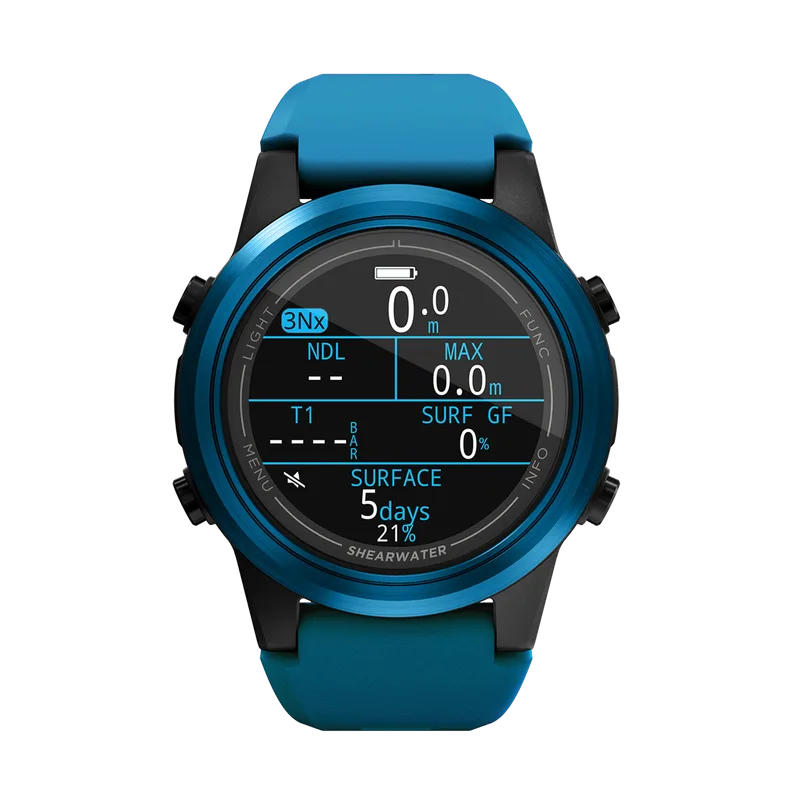
A compact, round dive computer with a 1.3-inch AMOLED display and four-button operation. Its air, nitrox, three-gas nitrox, gauge and freediving modes sit alongside vibration alerts and a rechargeable battery. Quick-release straps include a shorter option.
Check before buying: The standard Tern does not include wireless air integration or a digital compass. Compare with Tern TX if those are priorities; try the compact display in person to assess readability.
A compact AMOLED dive computer that adds wireless tank-pressure monitoring and a tilt-compensated compass to the Tern format. It accepts up to four transmitters and supports air, nitrox, three-gas nitrox, gauge and freediving modes.
Check before buying: Check whether the seller includes a compatible transmitter. For a larger display compare Peregrine TX; for trimix and closed-circuit functionality compare Teric and check its mode requirements.
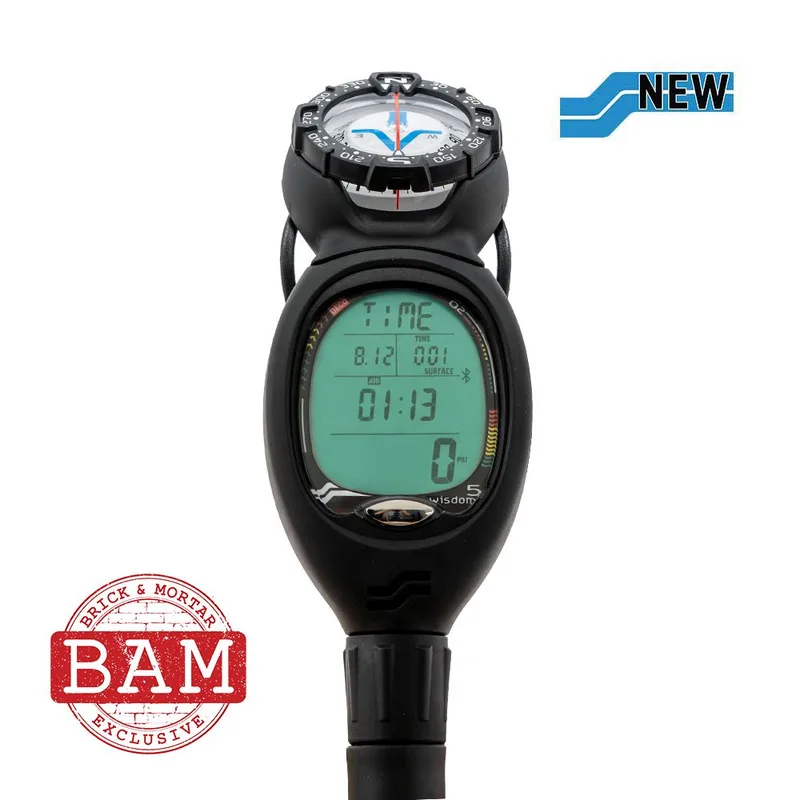
The Wisdom 5 is a hose-connected dive computer console with a liquid-filled compass and high-pressure quick-disconnect hose. It provides air, nitrox and gauge modes, two-button navigation, audible and visual alarms, and Bluetooth integration with DiveSync. Sherwood specifies storage for 60 dives and a user-replaceable battery.
Check before buying: This is a console purchase, so assess hose length, attachment and screen access with your assembled gear. Bluetooth log transfer does not mean wireless cylinder-pressure transmission. Confirm that your phone supports the current DiveSync app; information about the Wisdom 4’s logging software is not evidence for the Wisdom 5.
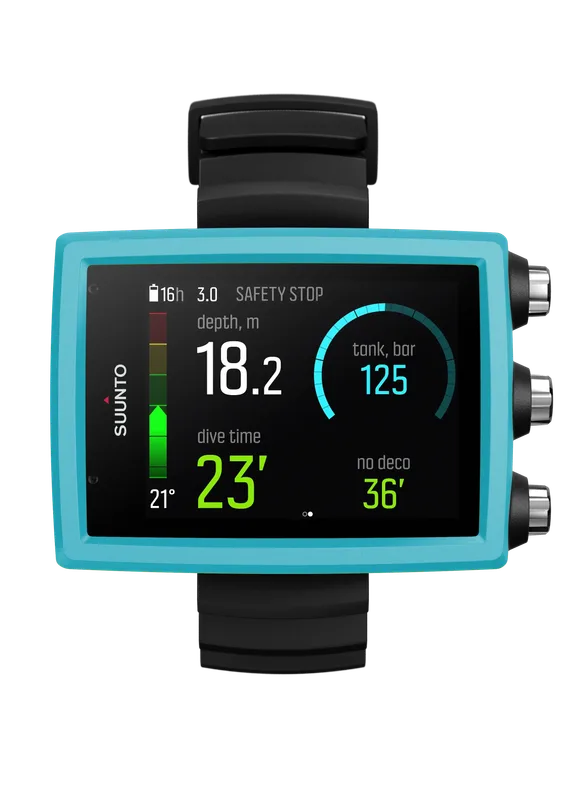
This Aqua Blue version of the EON Core is a compact colour-screen dive computer with a rechargeable battery. Suunto lists connectivity with its app and Tank POD pressure transmitter. The display-and-battery combination is its main distinction from watch-style computers such as the D6i Novo.
Check before buying: Check whether a Tank POD is included and which firmware and supported dive modes are installed. A compatible transmitter and a phone connection solve different jobs. Plan how you will recharge on a trip, and compare readability on your own wrist rather than assuming a colour display suits everyone.
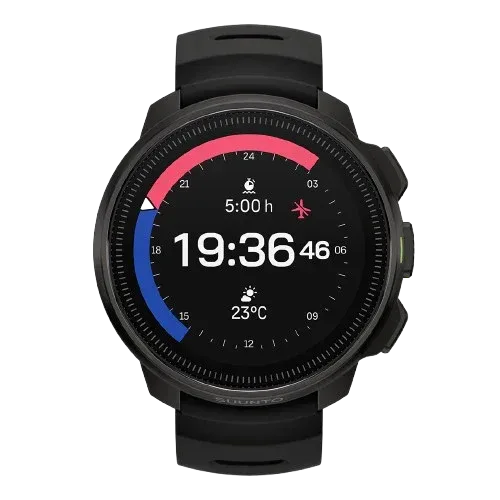
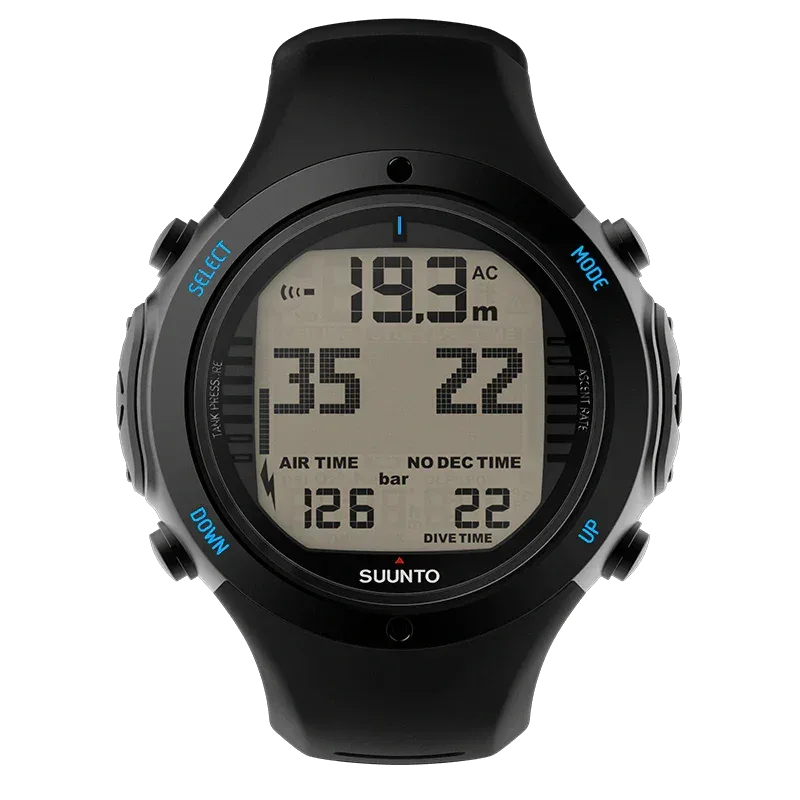
The D6i Novo Black is a watch-format dive computer with a steel case, a tilt-compensated 3D compass and optional wireless pressure integration. Suunto positions it as a robust wrist instrument. The compact watch layout makes it a different purchase from the larger colour-screen EON Core.
Check before buying: Check the correct compatible transmitter instead of assuming every Suunto transmitter works across the range. Try the display and buttons with your mask and gloves, and establish battery-service arrangements before ordering. The Black configuration should not be confused with a separate Zulu strap package.
A dive computer and sports watch with a sapphire-covered AMOLED display, rechargeable battery and digital compass. It supports air and nitrox diving, freediving and wireless tank pressure through a compatible Suunto Tank POD.
Check before buying: The listed 60 m maximum diving operating depth differs from its 100 m water-resistance rating. Confirm the Tank POD bundle and the features available in your current firmware before buying.
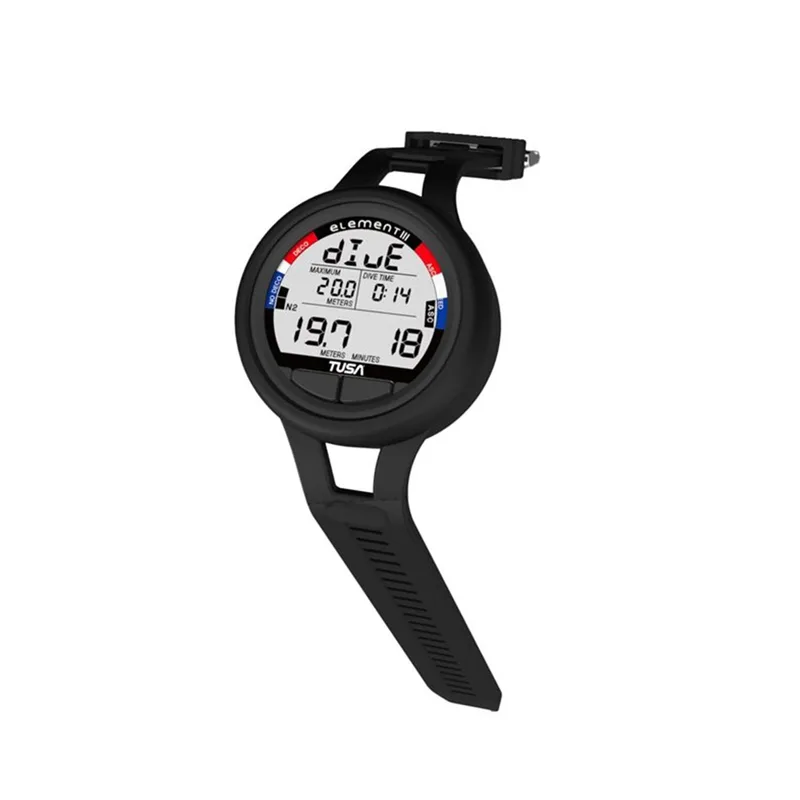
The Element III, model IQ1101, is a wrist computer with a backlight, audible alerts and a user-replaceable CR2450 battery. TUSA lists nitrox support, water activation and dive, gauge and watch modes. Its published log capacity is more than 500 dives, and a console version is a separate buying choice.
Check before buying: Check button access and screen readability before comparing it with larger colour-display computers. Verify the exact IQ1101 model and manual: Element II and other TUSA computers are not interchangeable evidence. Battery replacement must follow the manufacturer procedure, including seal care and checks.