Compare housing systems by exact camera, lens ports, controls and included accessories. Different-camera housings are alternative systems, not interchangeable parts.
Our category crown goes to our favourite from the models we’ve compared. It reflects our editorial preference; your fit, setup and budget still come first.
Buying rankings: choose by what you need
Three focused lists with real product photos, specifications and buying checks. List positions are editorial choices, separate from the verified scores below.
We have not verified an eligible numeric overall rating for these products. The shortlist below helps you compare documented features; its order is alphabetical, not a performance ranking.
Models to compare before buying
Alphabetical by brand and model. Each entry links to manufacturer specifications and any review evidence we have found.
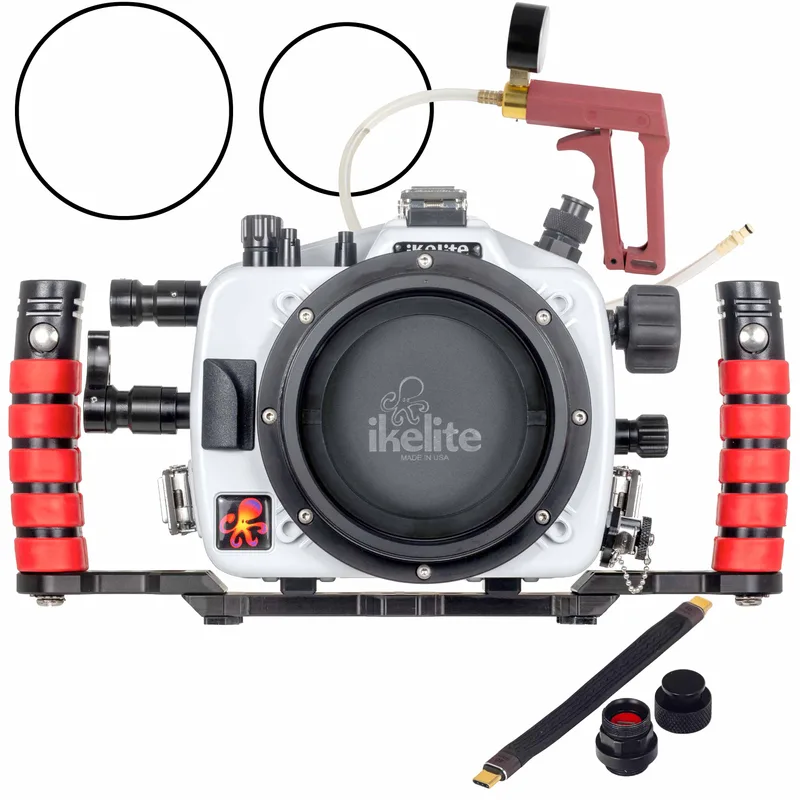
The R6 V Deluxe package adds two handles, a vacuum pump, spare O-rings and a USB-C charging/data bulkhead to Ikelite’s R6 V housing. That is useful for a first system where those accessories would otherwise be separate purchases. The surface USB-C connection reduces how often the camera must come out between shooting sessions.
Check before buying: Deluxe does not mean a complete underwater kit: the camera, lens and correct DL port remain separate. Nor does it establish extra camera-control access. The official controls table excludes joystick directions, the rear control wheel, front record button and electronic W/T functions, even though introductory copy suggests fuller control.
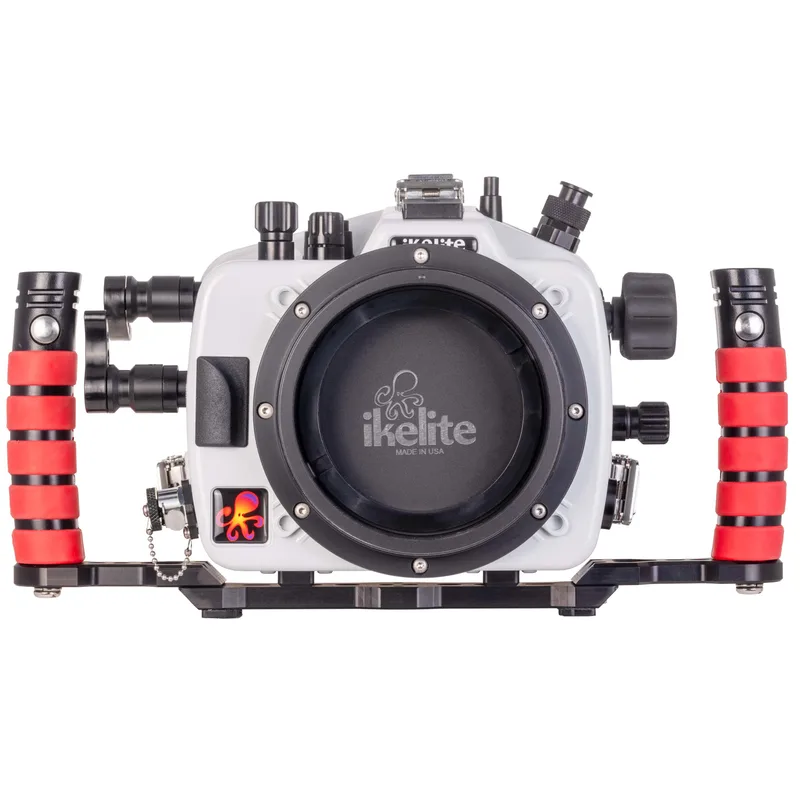
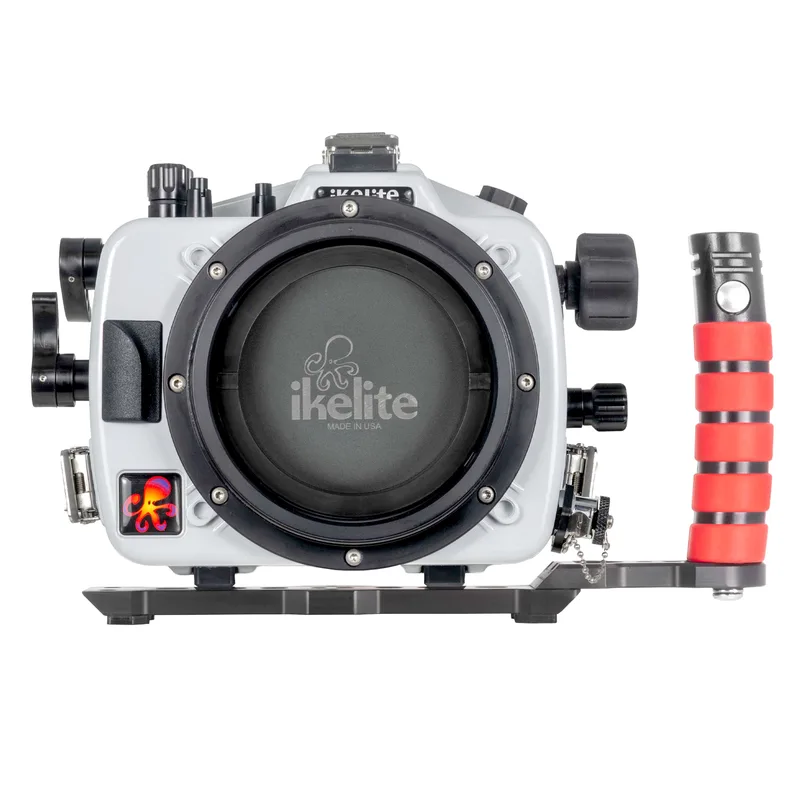
Ikelite’s standard R6 V housing is the starting point for a Canon R6 V underwater system, with a clear rear panel and a DL lens-port mount. The single left handle keeps the base package simpler than the Deluxe version. It makes most sense if you already own compatible handles and vacuum accessories, or want to choose those parts individually.
Check before buying: The housing needs a separately selected DL port before it is watertight. Flash connections are optional: budget for the appropriate bulkhead or optical trigger and Canon shoe adapter. The controls table excludes joystick directions, the rear control wheel, front record button and electronic W/T controls, despite broader wording elsewhere on the page.
The Nikon Z8 200DL housing is a DL-port body supplied with an electrical flash bulkhead, manual hotshoe and left quick-release handle. It suits Z8 photographers building around Ikelite ports and electrical strobes. The transparent rear makes the camera installation visible, while the separate port system accommodates different supported lens combinations.
Check before buying: TTL requires additional compatible conversion hardware. The controls omit joystick directions, Fn1, Fn2 and diopter adjustment; joystick press-in remains available. A surface USB-C upgrade is optional and needs the specified right-angle adapter. Those omissions matter more than a generic claim of full camera access.
Ikelite’s Nikon ZR housing pairs a DL port mount with a dual-handle base for a compact cinema-camera rig. The included surface USB-C charging/data connection, vacuum pump and spare seals are practical additions for repeated filming sessions. M16 and M24 accessory positions provide room to plan an external monitor connection.
Check before buying: The housing’s electronic-zoom control is excluded; supported lenses use the appropriate mechanical zoom gear. A DL port and any required extensions must match the exact lens. Monitor housing, cable and bulkhead compatibility should be confirmed together rather than inferred from the presence of an accessory opening.
The R7 fibre-optic update packages Ikelite’s Canon EOS R7 housing with an integrated optical TTL transmitter, two handles, a vacuum pump and spare O-rings. It gives an R7 owner a defined starting point for a still-photo rig, particularly when pairing it with compatible Ikelite optical strobes.
Check before buying: The DLM port is a separate purchase, selected for the actual lens and required gear. TTL support is limited to the specified Ikelite combinations; other strobe brands operate manually. The listed control exclusions include directional multi-controller use, diopter adjustment, depth-of-field preview and focus-mode switching. Do not mistake the similarly named R8 housing for an interchangeable body.
This R8 housing is the fibre-optic update, with an integrated TTL transmitter, dual handles, vacuum pump and spare seals. It is a compact DLM-port option for Canon EOS R8 owners who want optical flash triggering without assembling the housing-side transmitter separately. It is distinct from earlier electrically triggered R8 packages.
Check before buying: Ikelite specifies TTL with compatible Ikelite strobes; other brands are manual-only in this setup. Older DS strobes need the appropriate RC2 receiver at each strobe. A matched DLM port is still required and is not included. The controls list excludes diopter adjustment, directional multi-controller operation, depth-of-field preview and the focus-mode switch.
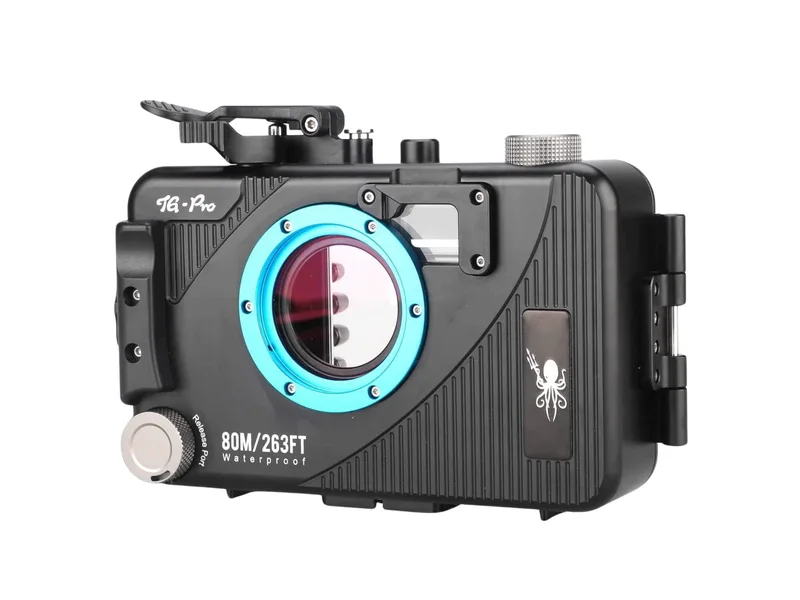
The TG-PRO is an aluminium camera housing sold for Olympus/OM System TG-6 and TG-7 cameras. Its appeal is the built-in electronic vacuum system, access to camera controls and provision for an internal 18650 battery to charge the camera. The 52 mm port thread accepts compatible wet optics; 67 mm lenses require an adapter.
Check before buying: Kraken’s description says 100 m, while its specification table and housing photograph say 80 m. Treat the depth rating as unresolved and obtain confirmation for the actual housing before purchase. The page also mentions TG-5 compatibility, which should be checked rather than inferred from the TG6/TG7 title.
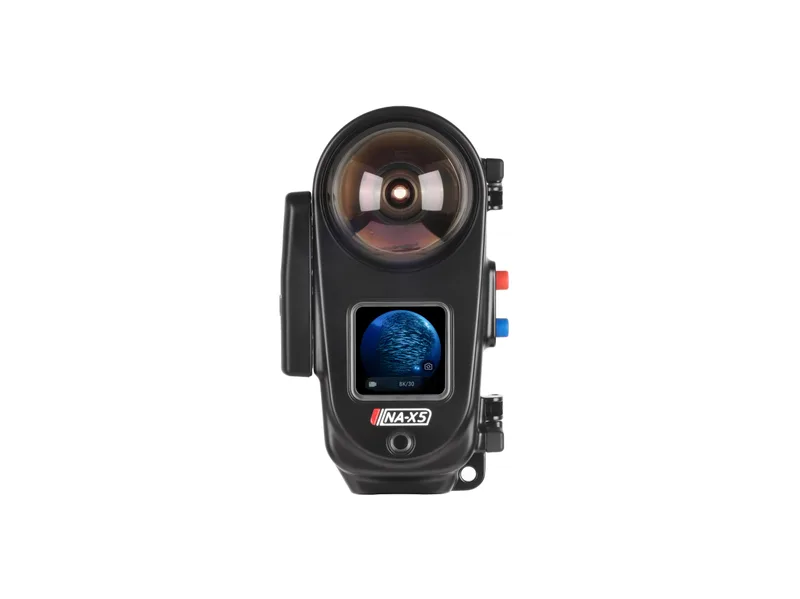
Nauticam’s Insta360 X5 housing is a dedicated 360-camera enclosure with a separate 190-degree optical assembly for each lens. Unlike a conventional camera housing with interchangeable ports, it has fixed optics and requires removal of the camera’s two outer lenses using the supplied tool. The rotary closure and external power and quick buttons keep operation relatively simple.
Check before buying: The advertised 150 m rating applies only from serial number A692561 onward. Confirm the serial on older stock. An owner’s WaterPixels report corrected an initially poor stitching result after changing editing settings, but still reported exposure seams and flare from point lights. That is useful caution from one user, not a scored laboratory comparison.
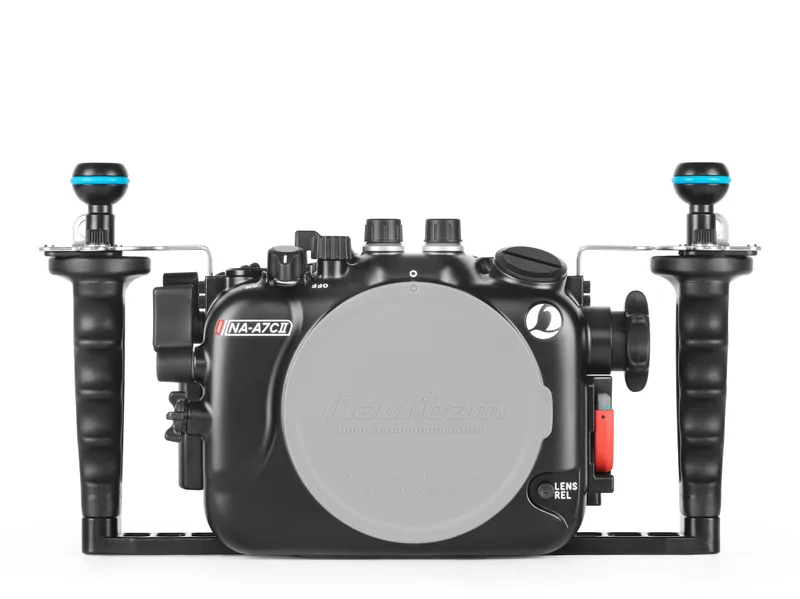
The NA-A7CII/R houses either the Sony A7CII or A7CR in a relatively compact N100 body. At a listed 1.9 kg, it is lighter than several larger Sony Nauticam housings, though a finished underwater setup still needs its lens port and lighting. It is intended for owners who want to keep one of these compact full-frame cameras underwater.
Check before buying: An optical LED trigger or electrical bulkhead is optional rather than included. Vacuum monitoring also needs the separate valve to perform a vacuum check. Surface USB-PD bulkhead compatibility applies from serial A599661 onward, with the specified additional parts; confirm the serial of older stock or a used housing. The listed monitor options use HDMI 1.4.
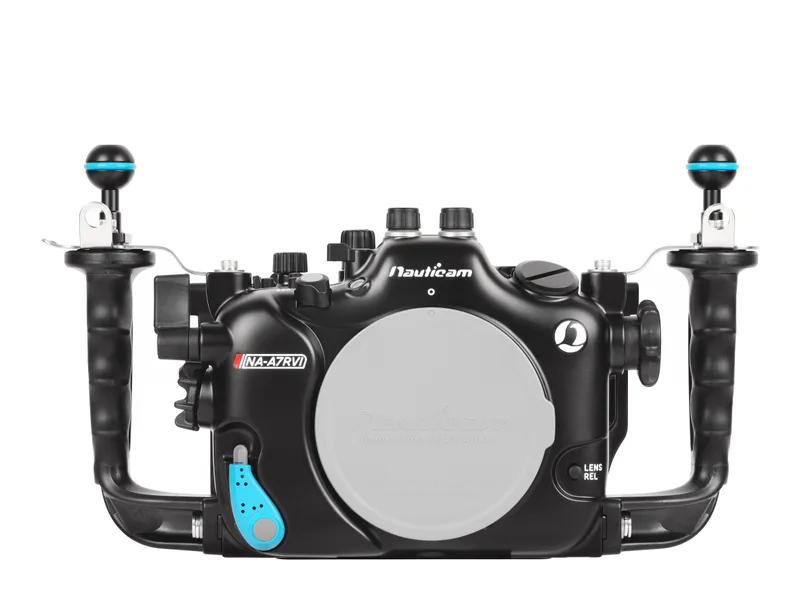
The NA-A7RVI gives the Sony α7RVI a Nauticam N100 housing with integrated handles. It is a platform for a lens-specific port system rather than a ready-to-shoot package. Front M24 and rear M14 openings provide routes for compatible accessories.
Check before buying: Older N100-to-N120 adapters are not automatically compatible: Nauticam specifies serial cut-offs for both 37305 and 37306. The TTL trigger also needs its specified adapter. A review of the A7R V housing cannot supply a score for this version.
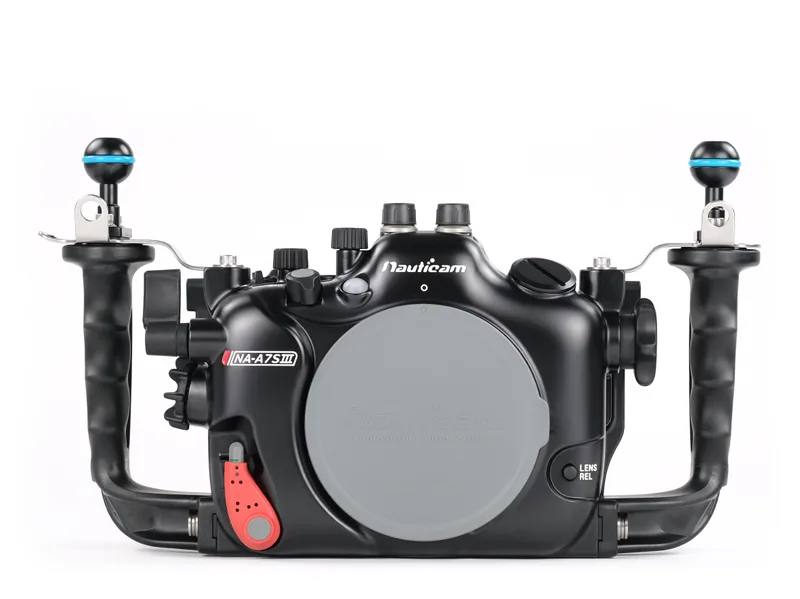
The NA-A7SIII is a Sony A7S III housing with controls arranged for video work: the right thumb reaches AF-ON and record, while playback is available at the left grip. Its N100 port mount and M24 monitor-cable provision give room to develop a larger filming rig without relying entirely on the camera’s rear display.
Check before buying: The housing is listed as made to order. The M24 opening does not include an external recorder, its housing or the required cable system. Vacuum electronics are built in, while the M14 valve remains optional. The manufacturer lists 560 g negative buoyancy with camera and battery, before the complete port and lighting configuration is considered.
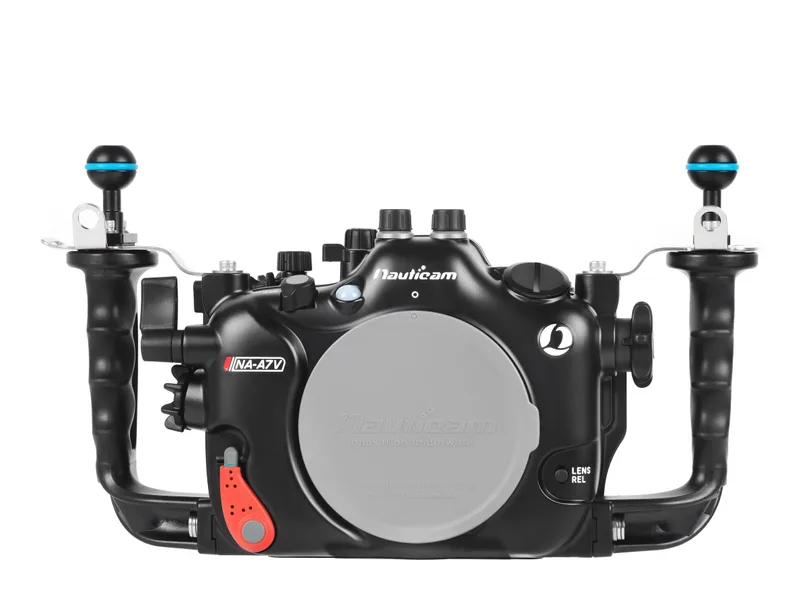
The NA-A7V is the N100-port Nauticam housing for Sony’s A7 V. Its handgrip controls, aluminium body and monitor-connection options suit photographers and hybrid shooters who want to build a full interchangeable-lens rig. Dual handles provide attachment points for the lighting system rather than making the housing a complete kit on their own.
Check before buying: Optical flash triggering needs the appropriate optional trigger, and electrical sync needs an additional bulkhead. Vacuum monitoring electronics are built in, but the valve is a separate accessory. Ports, zoom gears and monitor cables must be selected for this housing and lens combination; similarly named Sony housings should not be treated as interchangeable.
The NA-C400 is a production housing for Canon’s C400 cinema camera, supplied with handles, skids, a monitor shade and a vacuum valve. Mechanical power, zoom, focus and lens-release controls work alongside electronic remote controls at the grips and rear. This is a substantial camera platform intended for a prepared filming operation.
Check before buying: The manufacturer depth rating is 80 m, not the 100 m common to several smaller Nauticam housings. Air weight is 6.64 kg with handles and skids. The listed negative buoyancy assumes a camera, LCD monitor and BP-A60 battery; changing ports or mounting extra equipment changes the finished balance.
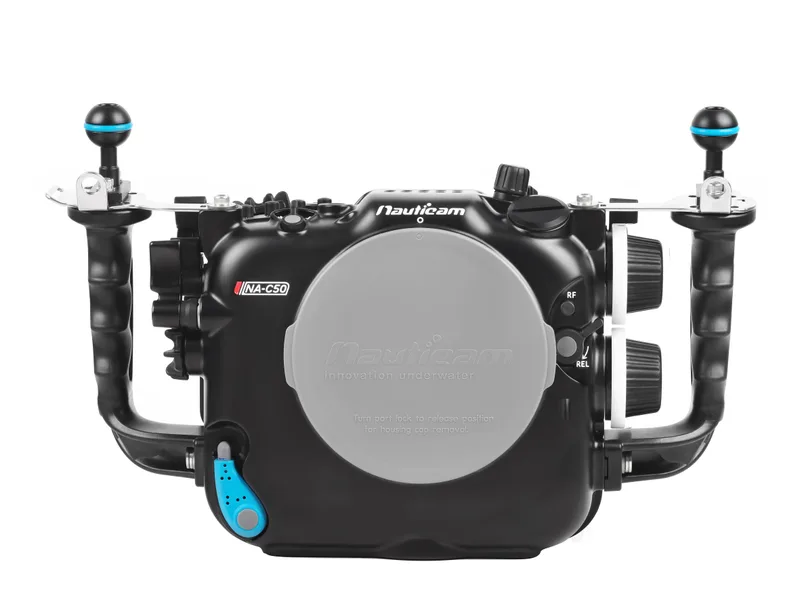
The NA-C50 is a cinema-focused Canon C50 housing with space for an optional USB power bank and provisions for external monitoring. Its N120 Canon RF Mount II port chart is the starting point for choosing lenses, extensions and gears. The built-in mounting plate is useful for a production rig that needs more than two handheld grips.
Check before buying: The power-bank compartment is limited to 165 × 76 × 26 mm; do not assume an existing battery fits. A vacuum valve is optional. EF lenses require the appropriate adapter and port combination, and control of a variable-ND adapter needs the specified additional hardware. The housing alone does not supply a finished monitor or lens system.
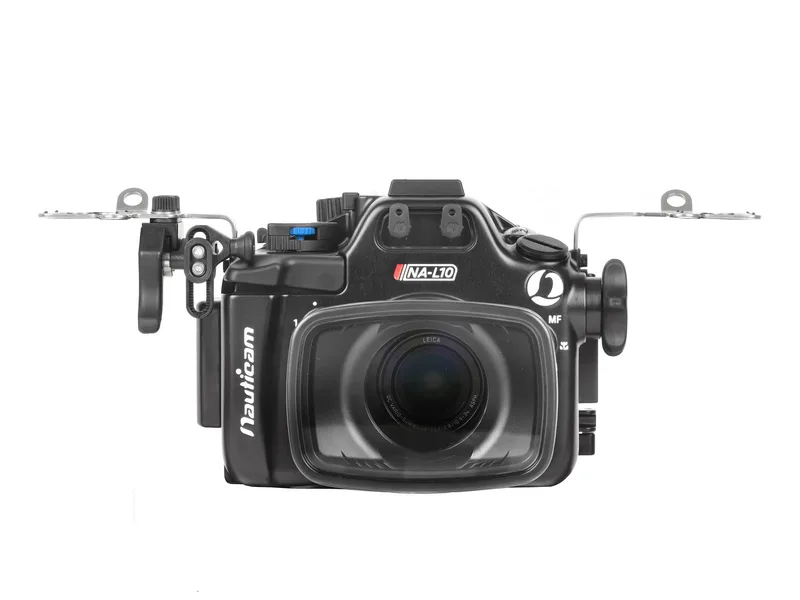
The NA-L10 is a compact aluminium housing for the Panasonic Lumix L10. Its included standard N50 port provides a starting point for the camera; optional short ports and wet lenses change the optical setup. Handle brackets and a shutter extension are included, but the standard housing should not be confused with the more fully equipped Pro package.
Check before buying: The optional mini flash trigger has a serial-number compatibility requirement. The vacuum valve is also an extra, despite the built-in monitoring electronics. Older LX10 housing reviews do not establish performance of this L10 model.
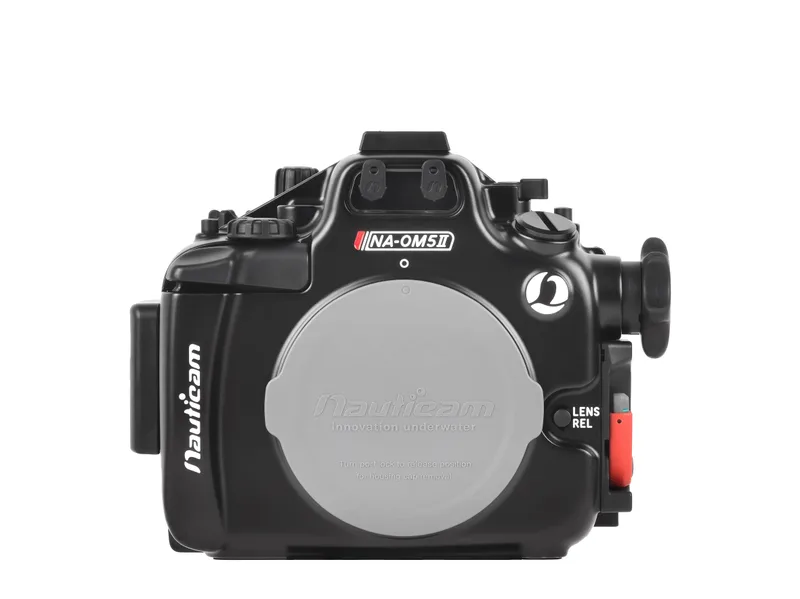
The NA-OM5II is a compact N85 housing for the OM SYSTEM OM-5II. Its 1.3 kg housing weight offers a relatively small starting point for a Micro Four Thirds rig, with the final size determined by the lens port and lighting.
Check before buying: A tray and handles are optional. The Olympus mini flash trigger requires a specified serial number, while several accessory entries on the manufacturer page are still provisional. Reviews of the older E-M5 II housing do not apply to this model.
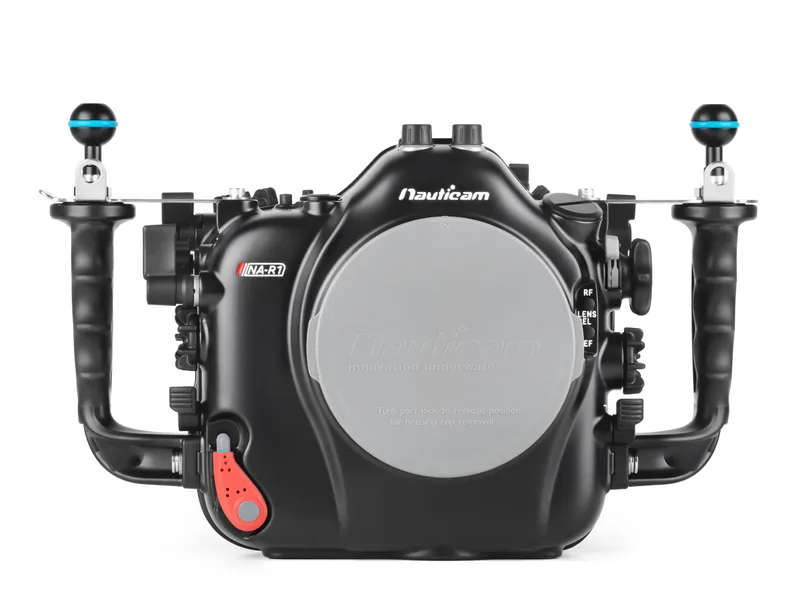
The NA-R1 brings Canon’s EOS R1 into Nauticam’s N120 RF-mount optical system, with controls positioned around the two handles and access to essential customisable buttons. It is a large-camera housing for photographers who intend to keep the R1 as the centre of their underwater kit.
Check before buying: The 3.94 kg housing weight is only part of the packed system. Optical bulkheads do not include a flash trigger; manual or TTL trigger hardware is optional, as are electrical bulkheads. Vacuum monitoring electronics are standard but the valve is extra. An upgraded viewfinder or external monitor also adds parts, weight and cost.
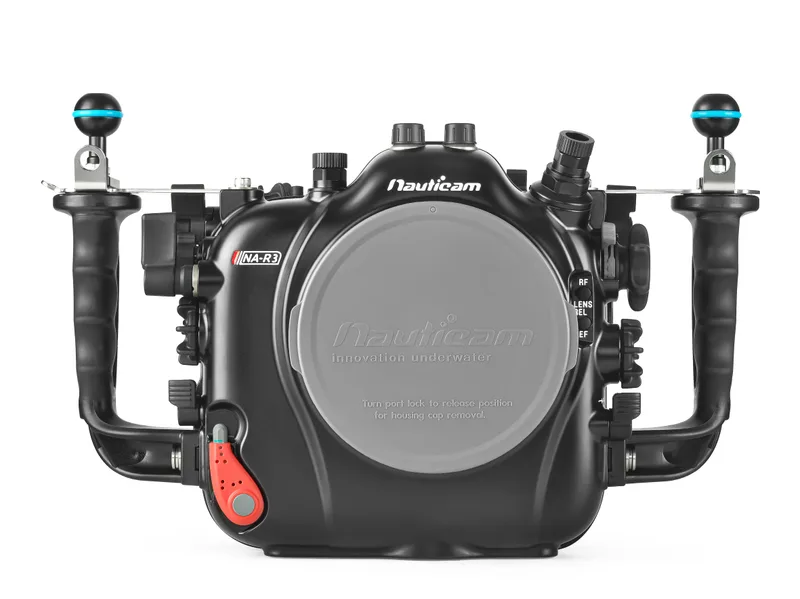
Nauticam’s NA-R3 accommodates Canon’s large EOS R3 body with a two-handle layout and N120 optics. It is aimed at photographers who already want the R3’s controls and viewfinder underwater, rather than buyers seeking the smallest travel rig. The supplied electrical bulkheads and available optical-trigger options allow different strobe arrangements.
Check before buying: The housing weighs 3.6 kg in air before completing the optical system. Nauticam lists it as made to order with extended lead times and a non-returnable order policy. The optional variable-ND adapter control kit has a serial-number restriction: A482725 onward. A vacuum valve and upgraded viewfinder are separate choices.
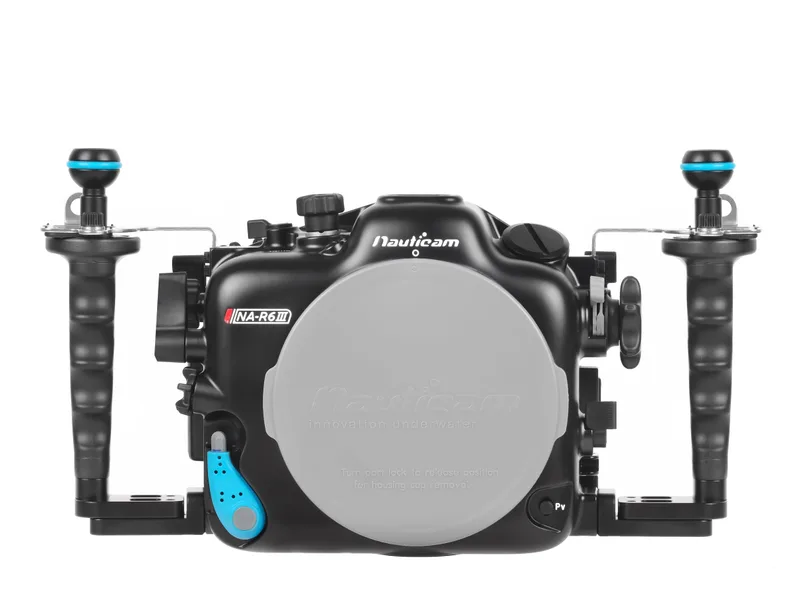
The NA-R6III is a stills-and-video housing for the Canon EOS R6III, using Nauticam’s N120 RF Mount II system. Its RF lens-release control and port-lock arrangement are relevant to photographers who change lens setups between dives. Handles are included.
Check before buying: Ports and flash triggers are separate purchases. Optical manual and TTL options use different trigger units, and electrical connections require their own fittings. The nearly neutral manufacturer buoyancy figure describes its stated camera configuration, not a complete rig with ports and lights.
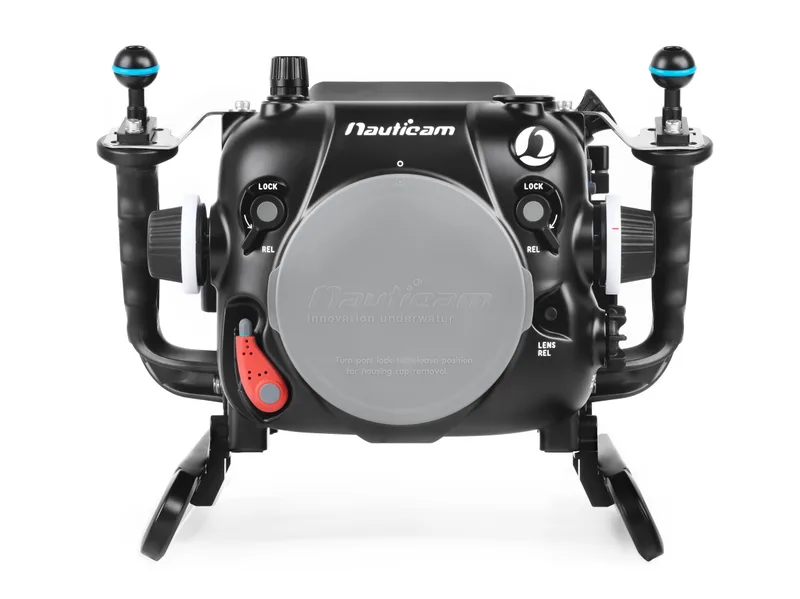
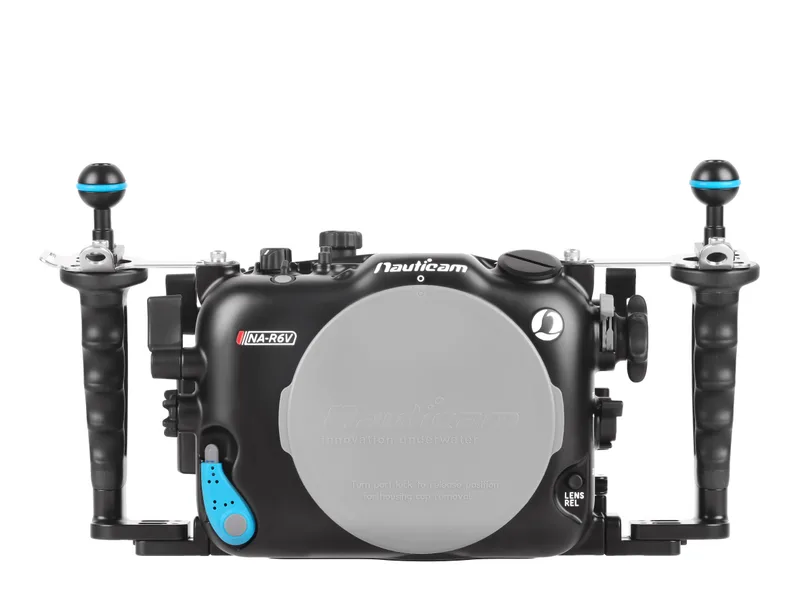
The NA-R6V is built around Canon’s video-focused EOS R6V and uses the N120 RF Mount II port system. A switchable zoom/focus control and preinstalled handles support a cinema-style rig, with mounting points for additional equipment.
Check before buying: This model does not provide flash-trigger or X-sync support. Monitor connections require the correct bulkheads and cables; an external monitor is not included. The camera’s lack of an electronic viewfinder also makes the display arrangement an important buying decision.
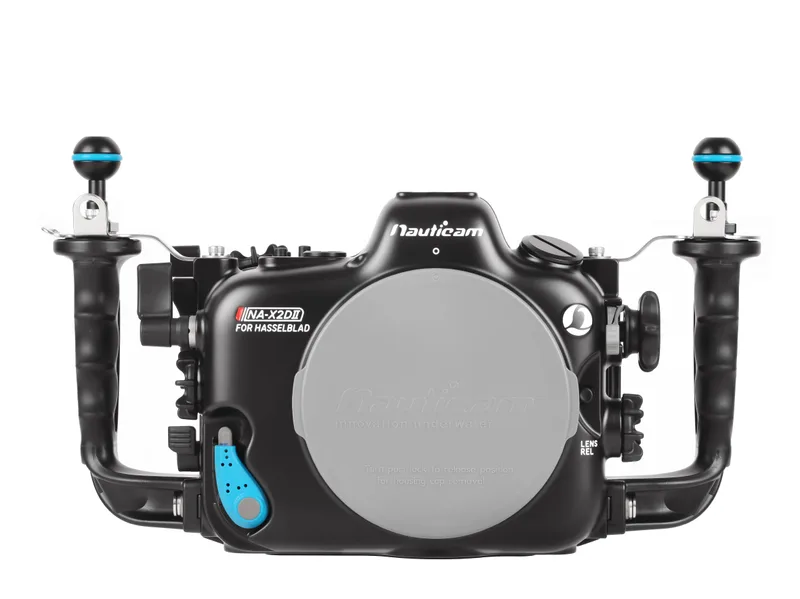
The NA-X2DII encloses the Hasselblad X2DII 100C in an N120 Auto Lock II housing with integrated handles. Dedicated lens-control arrangements make lens and gear selection central to building this medium-format system.
Check before buying: Some macro accessories and gears are marked as to be announced on the manufacturer page. Do not assume every XCD lens or wet optic is ready to use. The vacuum valve and manual flash trigger are optional purchases, and a camera-only review does not evaluate this housing.
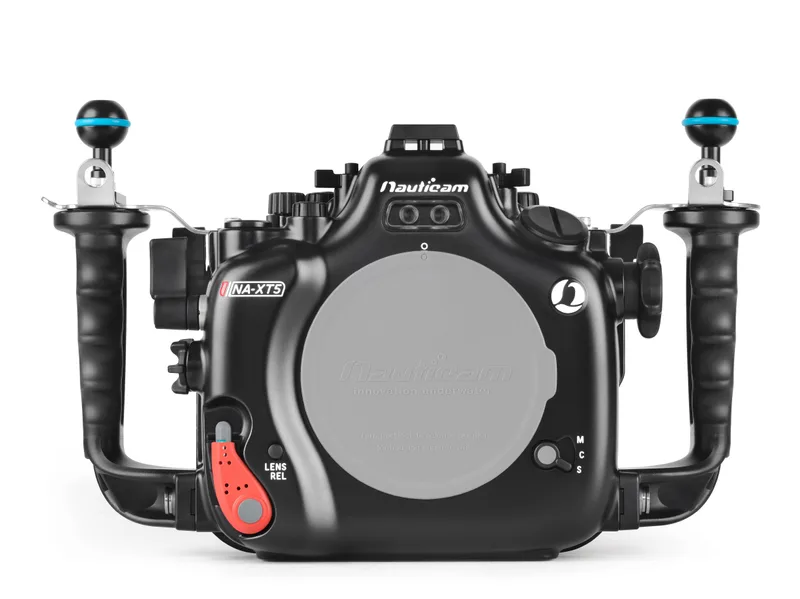
The NA-XT5 is Nauticam’s dedicated Fujifilm X-T5 housing, built around an N100 port mount and a two-handle frame. It suits an X-T5 photographer who wants interchangeable underwater optics and external strobes while retaining that camera system. Leak-monitoring electronics and the grip mounting balls are supplied with the housing.
Check before buying: Ports and gears are separate, and the N100 mount should not be confused with N85 housings used for other smaller cameras. The flash trigger and M14 vacuum valve are optional. Nauticam lists made-to-order availability, so confirm delivery and return conditions. HDMI accessory compatibility includes a serial-dependent note that should be checked against the actual unit before purchasing cables.
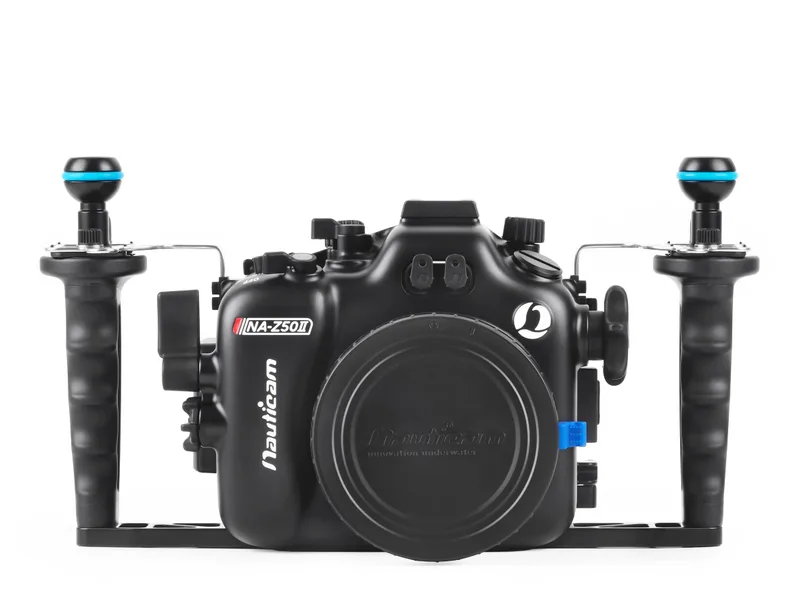
The NA-Z50II takes a deliberately restricted approach: its fixed flat port is designed for Nikon’s Z DX 16–50 mm f/3.5–6.3 VR lens. A preinstalled bayonet supports compatible wet optics, giving the travelling photographer options without a conventional interchangeable dry-port system.
Check before buying: The fixed port limits lens choice. The camera’s pop-up flash provides optical triggering, and the vacuum valve is extra. A published Z50 II camera test used an Ikelite housing, so it cannot establish a Nauticam housing score.
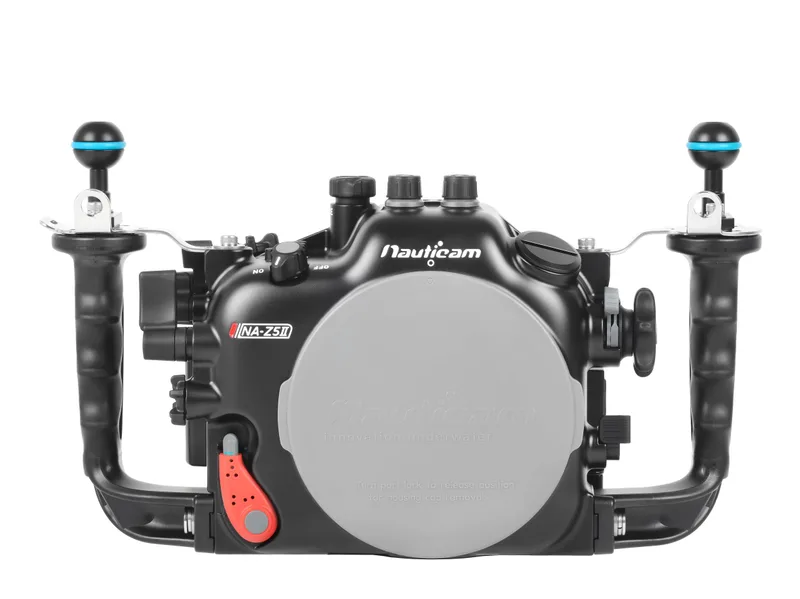
The NA-Z5II is a dedicated Nikon Z5II housing using Nauticam’s N120 Z6III/Z5II lens-port chart. It offers Z-mount support and selected adapted F-mount combinations, with leak/vacuum monitoring electronics built into the body. The mounting points give room to add lights or a tripod arrangement for a more involved photo setup.
Check before buying: The shared port chart does not mean a Z6III housing fits the Z5II camera. Updated zoom and focus gears apply, with the specified FTZ adapter arrangement needed for certain older gears. Full-frame viewfinder upgrades may require the optional LCD window. The manufacturer’s buoyancy table gives 60 g without a clear sign, so it should not be treated as a verified positive or negative balance.
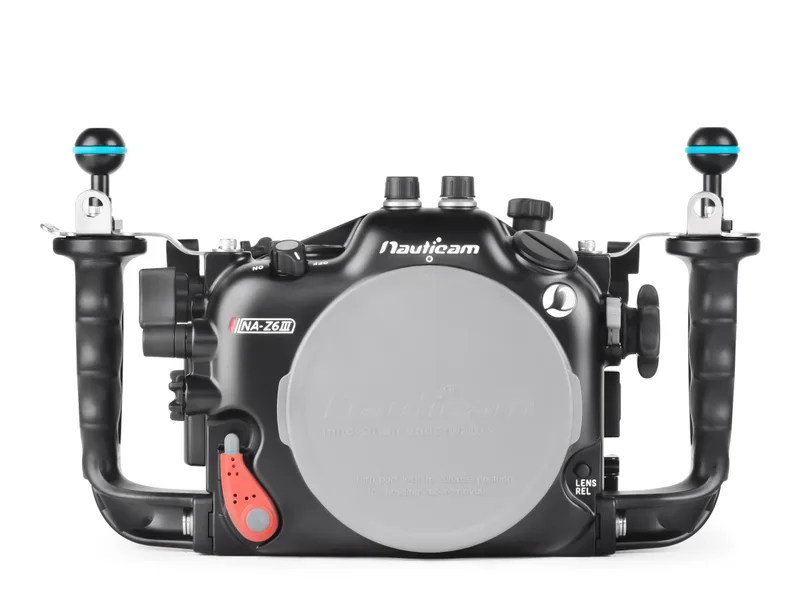
The NA-Z6III is an aluminium housing for Nikon’s Z6III, with the N120 Z6III/Z5II port system and an M24 opening for a compatible HDMI arrangement. It is a candidate for photographers combining stills with externally monitored video, provided the chosen lenses and accessories appear on the relevant compatibility charts.
Check before buying: The newer zoom and focus gear arrangement needs attention when moving from an earlier Nikon housing. Nauticam’s 22225 FTZ adapter arrangement supports specified older combinations, not every existing gear. Vacuum electronics are included but the 25624 valve is optional. The published near-neutral figure includes camera and battery and should not be read as the balance of a completed rig.
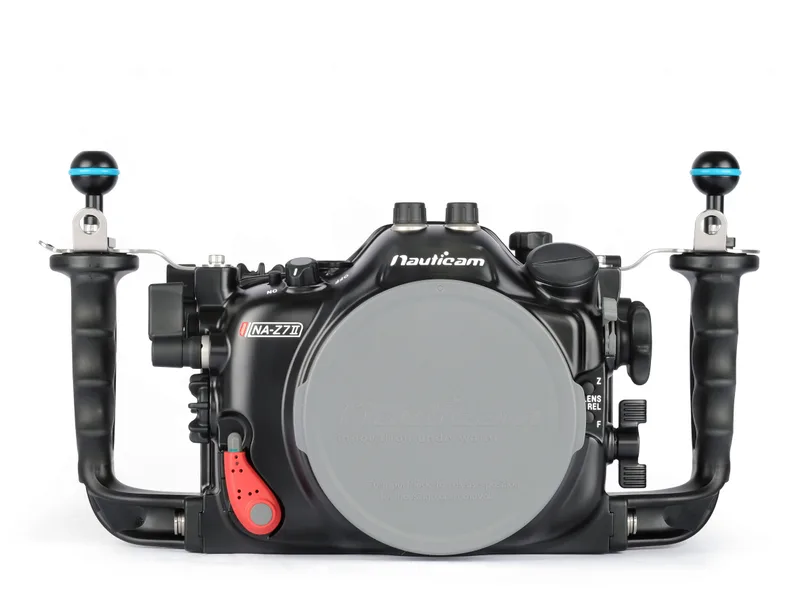
The NA-Z7II fits both Nikon Z7II and Z6II bodies and includes a manual optical flash trigger. Its N120 system supports appropriate Nikon lens-port combinations, with separate release controls for Z lenses and adapted F lenses. That flexibility is useful for a photographer who owns both native and adapted lenses.
Check before buying: Changing between F- and Z-mount arrangements still requires removal of the FTZ adapter; the two release controls do not eliminate every camera-handling step. TTL triggering is an optional upgrade, as is the M16 vacuum valve. This is not the housing for a Z6III, even though the names and port-system designation are similar.
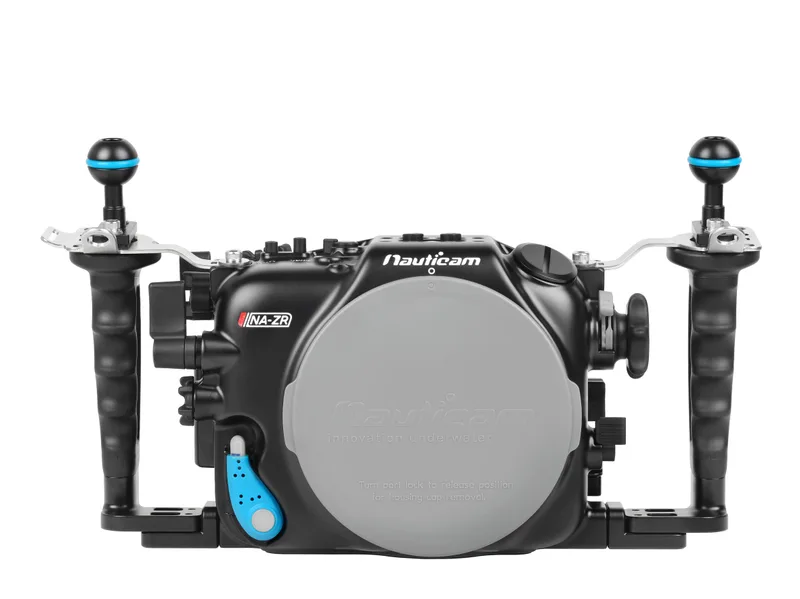
The NA-ZR is Nauticam’s Nikon ZR housing for filmmakers building around its N120 lens-port system. Its aluminium body has an integrated leak/vacuum monitoring circuit and mounting positions for a larger video rig. The camera tray arrangement allows the vacuum monitor to be reset without opening the lens-port assembly.
Check before buying: A vacuum valve is optional, even though the monitoring electronics are included. The ZR port chart uses specific zoom and focus gears; older Nikon gears are not automatically compatible. Nauticam lists the 22225 FTZ adapter arrangement for supported combinations, so an existing N120 collection still needs a lens-by-lens check.
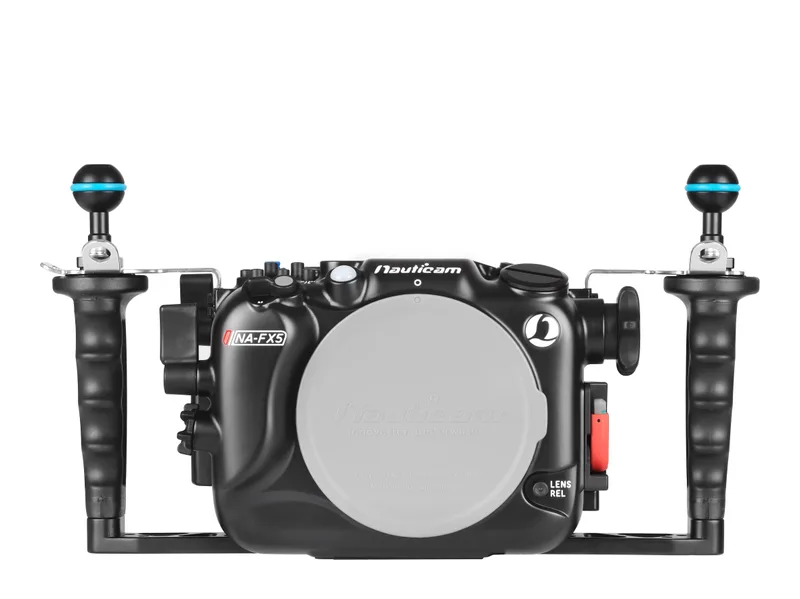
The NA-FX5 places Sony’s FX5 in an N100 housing with preinstalled handles and extensive accessory mounting points. Compatible HDMI and USB connections allow an external display and surface charging arrangement to be planned together.
Check before buying: The front Fn6 and front REC controls are not accessible through this housing. A rear recording lever remains available. The manufacturer specifies N100, so dealer speculation about an N120 version should not guide port purchases.
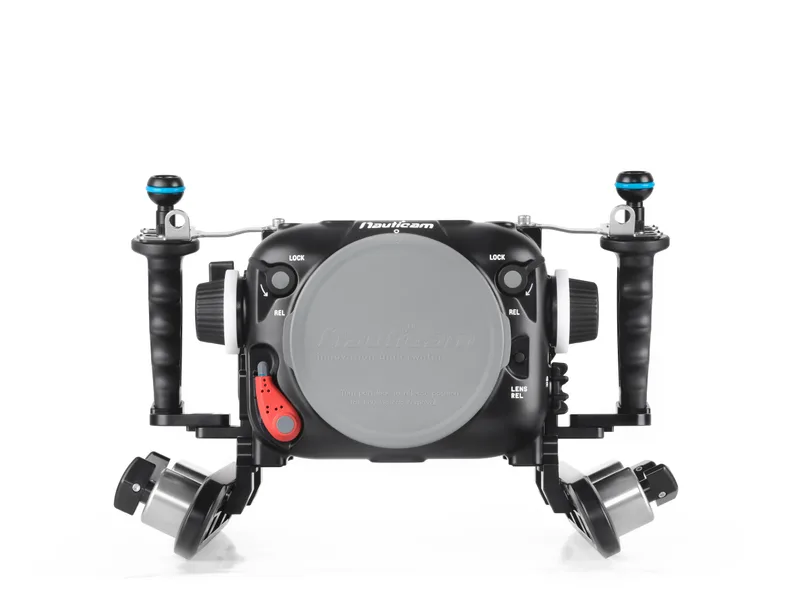
The Nauticam KOMODO-X housing is a cinema platform with adjustable handles, large lens-control wheels and housing skids. Its N120 Cinema port system can be adapted to N200 for suitable larger lenses. A wheeled case and adjustable ballast weights are listed among the included equipment.
Check before buying: The official page mixes some older KOMODO camera details with KOMODO-X information. We have therefore not repeated its recording-media or camera-battery claims. A verified housing depth specification and an exact monitor configuration still need confirmation.


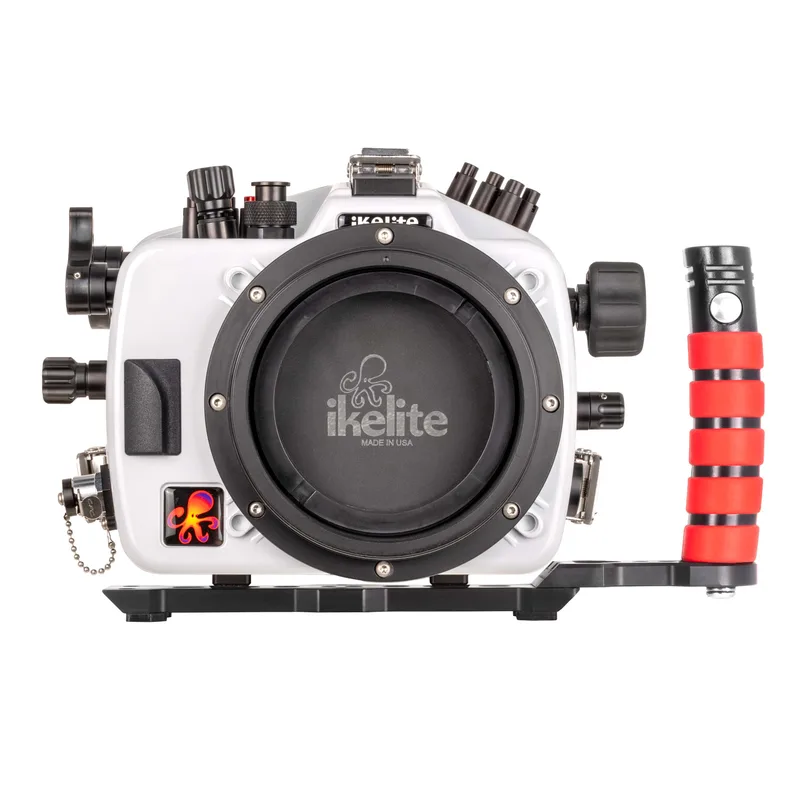
![200DLM/D Underwater Housing for Canon EOS R7 [Fiber Optic Update]](/images/products/ikelite-fce59117d19d7f35.webp)
![200DLM/D Underwater Housing for Canon EOS R8 [Fiber Optic Update]](/images/products/ikelite-d8134cf6b7347d84.webp)